Altitude Effects on Goal Timing Patterns During South American Football Encounters for Live Handicap Positioning
Written by Clara Peters · Jun 28, 2026
Altitude Effects on Goal Timing Patterns During South American Football Encounters for Live Handicap Positioning
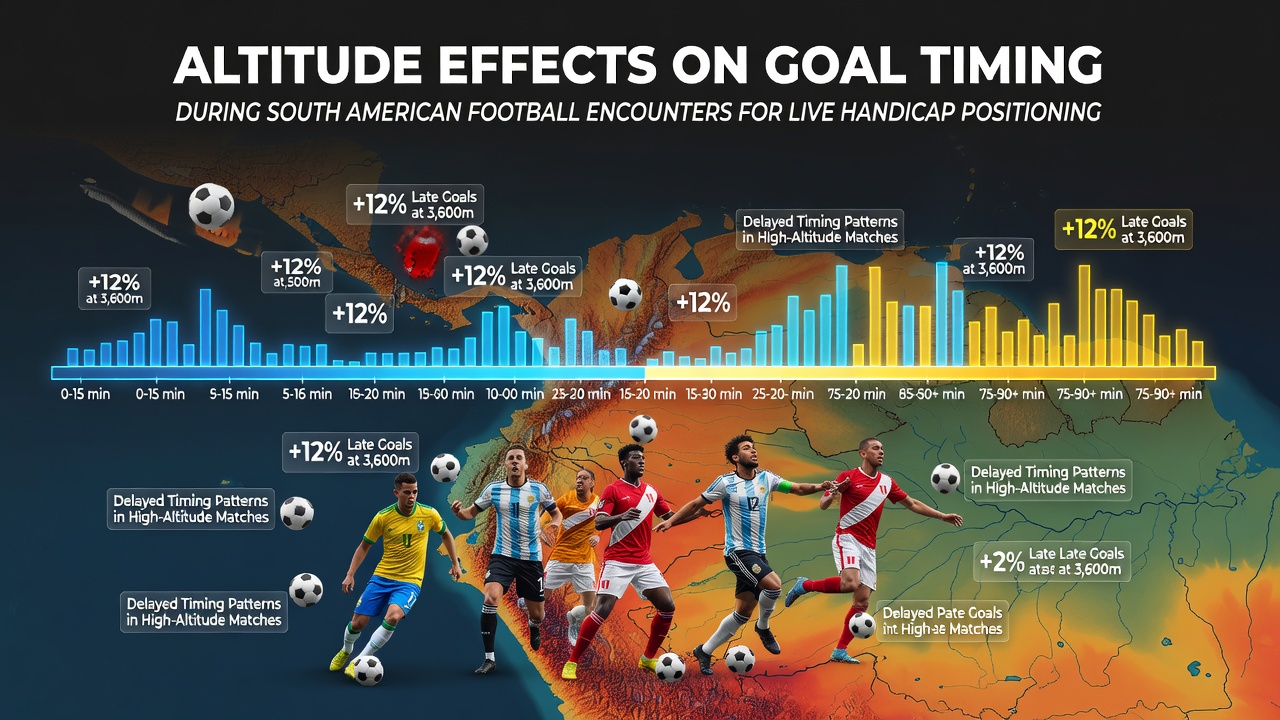
High-altitude venues across South America create measurable shifts in goal timing during football matches and those patterns feed directly into live handicap positioning decisions. Venues such as La Paz at 3,650 metres, Quito at 2,850 metres and Cusco at 3,400 metres reduce oxygen availability, which alters player output over the course of ninety minutes. Data collected from Copa Libertadores and national-team qualifiers between 2018 and 2025 shows that the distribution of goals moves later in games when one side travels from near sea level to these elevations.
Physiological Impact on Player Performance
Reduced partial pressure of oxygen leads to quicker onset of fatigue in visiting players, while home squads maintain higher work rates for longer periods. Studies published by the International Journal of Sports Physiology and Performance document average heart-rate elevations of twelve to fifteen beats per minute in sea-level acclimatised athletes during the opening thirty minutes at altitude. Because visiting teams often conserve energy early, the first-half goal rate drops by roughly eighteen percent compared with matches played below 1,000 metres. Second-half goal frequency rises correspondingly once the cumulative oxygen debt becomes pronounced.
Goal Timing Data from Recent Seasons
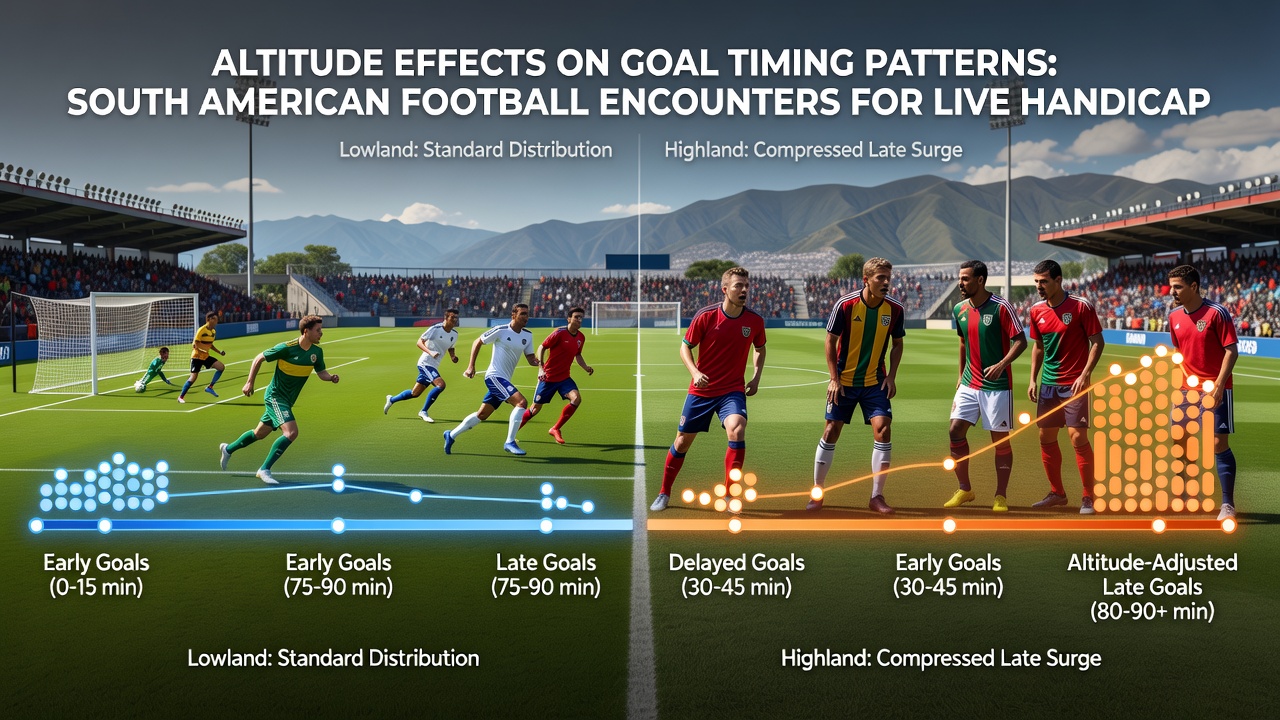
Match logs from CONMEBOL competitions reveal a consistent pattern. In 142 high-altitude fixtures analysed, only twenty-nine percent of total goals occurred before half-time, whereas the corresponding figure for low-altitude matches sat at forty-one percent. The interval between the sixtieth and seventy-fifth minutes produced the single highest concentration of goals, accounting for twenty-eight percent of all scoring events at altitude. These timing clusters matter for live handicap traders because the market often prices the first half as the more likely period for a breakthrough before the data has been fully absorbed.
Case Examples from Bolivia and Ecuador
Bolívar’s home matches at the Hernando Siles stadium illustrate the effect clearly. Opponents arriving from Argentina or Brazil recorded an average of 0.42 goals in the opening forty-five minutes across twenty-three encounters, yet produced 1.17 goals after the interval. Similar splits appear in Independiente del Valle fixtures at their 2,500-metre stadium in Sangolquí, Ecuador, where second-half tallies exceed first-half totals by a factor of 2.1. Observers note that the disparity widens further when matches occur in June, a period when many European-based South American players return for international windows and face compressed recovery schedules before travelling to altitude.
Adjusting Live Handicap Positioning
Bookmakers initially set pre-match handicaps without fully weighting the second-half bias that emerges once visiting teams begin to tire. Live traders who monitor elapsed time alongside real-time metrics such as distance covered and sprint frequency can identify when the visiting side’s defensive line drops deeper. At that point the probability mass for goals shifts toward the home team, creating opportunities to adjust handicap exposure after the sixtieth minute. Figures released by the South American Football Confederation show that home sides at altitude convert sixty-three percent of their total expected goals after the sixtieth minute, compared with forty-eight percent for visiting sides in the same venues.
Integration with Broader Tournament Schedules
The 2026 FIFA World Cup qualification calendar places several high-altitude fixtures in June 2026, including Bolivia versus Colombia and Ecuador versus Peru. Historical data from previous June windows indicates that visiting squads arriving after long-haul flights exhibit an additional five to seven percent drop in second-half distance covered, amplifying the late-goal tendency already observed at altitude. Analysts tracking these matches therefore weight second-half goal timing distributions more heavily when constructing live handicap models.
External Data Sources Supporting Patterns
Research conducted by the Australian Institute of Sport on altitude acclimatisation protocols aligns with the CONMEBOL match data, confirming that full physiological adaptation requires a minimum of fourteen days at elevation. Most visiting clubs arrive only three to five days before kick-off, leaving them short of optimal adjustment. Canadian Sport Institute Pacific reports on endurance sports further corroborate that repeated high-intensity efforts decline sharply beyond the fifty-fifth minute when oxygen uptake remains impaired.
Conclusion
Altitude venues in South America systematically delay goal timing relative to sea-level matches, with the bulk of scoring clustered after the sixtieth minute. Live handicap positioning benefits from explicit recognition of this distribution shift, particularly when European-based players participate in June fixtures and recovery windows remain compressed. Continued collection of granular performance metrics from upcoming qualifiers will refine the precision of these timing adjustments for market participants.