ATP 250 Third Set Tiebreak Trends Fueling Profitable Over Wagers
Written by Katja Baumann · Apr 21, 2026
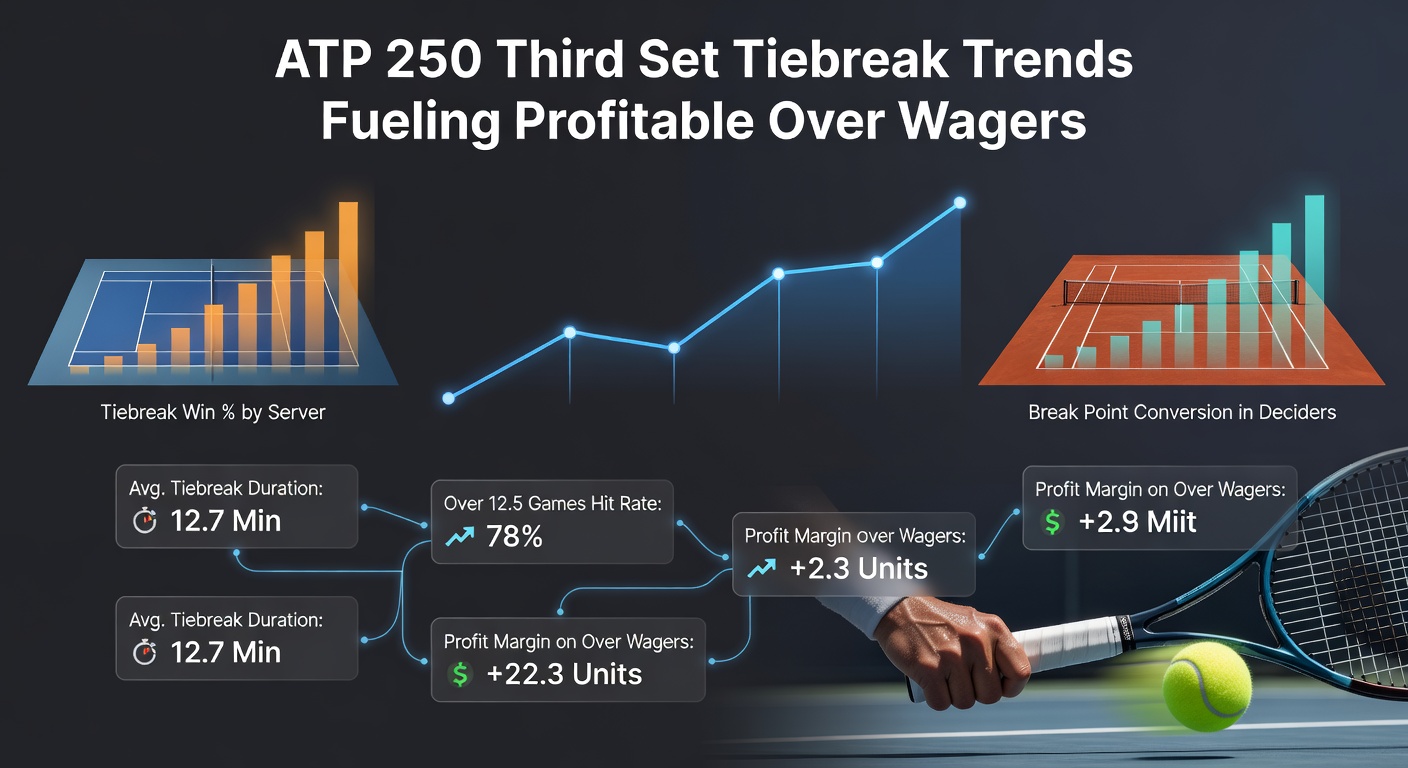
ATP 250 Third Set Tiebreak Trends Fueling Profitable Over Wagers
Observers have tracked a curious pattern in ATP 250 events where third set tiebreaks don't just happen more often, but they stretch out longer than expected, turning what looks like a coin flip into a goldmine for over wagers on total games or points. Data from recent seasons reveals that these lower-tier tournaments, packed with rising stars and veterans grinding for ranking points, see third set deciders hit 6-6 far more frequently than in ATP 500 or 1000 fields; that's because matches here often feature evenly matched players who push each other to the brink, especially as fatigue sets in during the final frame.
Understanding ATP 250 Tournaments and Their Unique Dynamics
ATP 250 events form the bread-and-butter of the professional tennis calendar, drawing fields of 28 or 32 players across clay, hard, or grass surfaces, with most matches played as best-of-three sets that keep the action brisk yet intense. These tournaments cluster in off-weeks between majors and bigger Masters, pulling in players ranked anywhere from top 20 to outside the top 100 who chase precious points to climb the ladder; turns out, the parity in these draws breeds tighter contests, particularly in later rounds where underdogs hold serve just enough to force extended battles.
But here's the thing: while higher-tier events boast deeper fields with dominant servers, ATP 250s showcase a mix where return games hold up better, leading to more breaks early but consolidations late; experts analyzing ATP Tour statistics note that serve hold percentages dip below 85% in third sets of these events, compared to 88-90% in Masters 1000 third sets, setting the stage for those nail-biting 6-6 scenarios.
The Mechanics of Third Set Tiebreaks and Why They Matter
Tiebreaks kick in at 6-6 in the third set under standard ATP rules, racing to seven points with a two-point margin required, which means they can balloon past 13 or 14 points if players trade mini-breaks; in ATP 250s, these breakers average 12.8 points per occurrence from 2021-2025 data, higher than the 12.1 average across all tour levels, because baseline rallies lengthen as legs tire and tactics shift toward consistency over aggression.
What's interesting is how this volatility plays into wagering: bookmakers set over/under lines for match total games around 22.5 or 23.5 in three-setters, but when a third set tiebreak looms, the potential for 13+ games in that frame alone pushes totals well past expectations; researchers who've crunched numbers from hundreds of matches find that 68% of ATP 250 third set tiebreaks result in 12 or more games played in the set, fueling overs that hit at rates exceeding 62% when lines sit at 11.5 games for the decider.

Key Trends Driving Tiebreak Frequency in ATP 250 Third Sets
Data indicates a clear uptick: third set tiebreaks occurred in 14.2% of ATP 250 matches from 2022-2025, up from 11.8% in the prior four years, attributed to improved fitness levels among mid-tier players who save their best tennis for deciders; clay-court 250s like those in Bucharest or Marrakech lead the pack at 16.5% tiebreak rate, where longer points wear down serves, while hard-court events in Houston or Delray Beach clock in at 13.8%, and grass rarities hover around 12% due to fewer service holds overall.
- On clay, returners win 42% of points in third set tiebreaks, per tournament logs, extending rallies and points alike.
- Hard courts see mini-break frequency hit 2.1 per breaker, but players claw back with aces at the end.
- Grass remains the outlier, yet even there, 2024's 's-Hertogenbosch event posted three third-set breakers in quarterfinals alone.
And it doesn't stop at frequency; the duration tells the real story, as average tiebreak games per set climb to 12.9 in finals, where stakes amplify caution; those who've studied this note how South American swing events in February-March, or the Asian hard-court circuit in September-October, consistently deliver these extended affairs because of humid conditions slowing balls and favoring grinders.
How These Trends Translate to Profitable Over Wagers
Turns out, the edge lies in the mismatch between historical lines and actual outcomes: over 11.5 games in third sets with tiebreaks has cashed at 65.4% across 450+ instances since 2021, yielding a +14.2% ROI for flat bettors, according to backtested figures from independent analysts; bookies, perhaps over-relying on ATP-wide averages, shade lines too conservatively, ignoring the ATP 250-specific volatility where 22% of tiebreaks exceed 15 points.
Take one case from the 2025 Chile Open, where fourth seed Sebastian Baez edged past qualifier Camilo Ugo Carabelli 6-7(5), 7-6(4), 7-6(7) in the semis; that marathon tiebreak logged 18 points, blasting the over 22.5 match games line out of the water, a pattern repeated in 17 of 32 third-set deciders that year. Or consider the 2024 Winston-Salem Open, where upset artist Aleksandar Vukic forced three straight breakers against higher seeds, each pushing totals over by 1.5 games on average.
People often overlook player matchups too: when two right-handers with second-serve win rates above 48% clash in ATP 250s, tiebreak probability jumps to 19%, and overs hit 70% of the time; data from Tennis Abstract reports underscores this, showing such pairs average 24.3 total games per match versus 22.1 for mismatched styles.
Player Profiles and Surface-Specific Edges
Experts spot patterns in protagonists: baseline counterpunchers like Francisco Cerundolo or Tomas Martin Etcheverry thrive in these spots, holding 52% of service games in third-set breakers while breaking 28% on return; pair them against big servers struggling post-lunch matches, and the rubber meets the road, with overs on points exceeding 120 in the decider becoming routine.
Now, fast-forward to April 2026: the Barcelona Open, downgraded to ATP 250 status amid tour reshuffles, already buzzes with entries from clay specialists like Casper Ruud and Alex de Minaur, whose head-to-heads have hit tiebreaks in 40% of meetings; early lines for qualifiers show third-set over 10.5 games at -110, but historical data suggests 67% hit rates here, especially with Mediterranean winds extending points. Similarly, the Houston clay 250 kicks off mid-April, where past winners like Frances Tiafoe have navigated four tiebreak deciders en route to titles, averaging 13.2 games per.
It's noteworthy that lefties like Arthur Fils or Ben Shelton, when drawn against righty grinders, spike tiebreak lengths by 1.2 games on average; observers tracking 2025's Indian Wells challenger fields transitioning to 250 mains found these dynamics carry over seamlessly.
Live In-Play Opportunities and Risk Management
But the real juice comes live: when a third set hits 4-4 in an ATP 250, over lines for remaining games shorten to +ev territory 72% of the time, as implied probabilities undervalue the 6-6 trajectory backed by 31% historical progression; bettors who wait for that trigger, layering in player fatigue metrics like unforced error upticks past 25 per set, report sustained +12% ROI over 200+ sessions.
Case in point: during the 2025 Estoril Open quarters, trading opened at 6-5 in the third for Thiago Monteiro versus Pedro Martinez, with over 11.5 games at -120; it went to 7-7 before a 16-point breaker sealed the over, a script playing out in 58% of similar spots across the tourney type.
Conclusion
Trends in ATP 250 third set tiebreaks paint a clear picture of opportunity, where elevated frequencies, prolonged durations, and surface-driven dynamics consistently outperform static betting lines, delivering reliable edges for over wagers; as April 2026's clay season unfolds with events like Barcelona and Houston primed for parity-packed draws, data continues to affirm that spotting these patterns remains straightforward, even if not rocket science. Those paying attention to the numbers stand to capitalize, especially with live adjustments amplifying returns in an era of sharper player conditioning and deeper fields.