Examining Crowd Noise Levels and Their Effect on Free Throw Percentages During NBA Playoff Series
Written by Katja Baumann · Oct 8, 2026
Examining Crowd Noise Levels and Their Effect on Free Throw Percentages During NBA Playoff Series
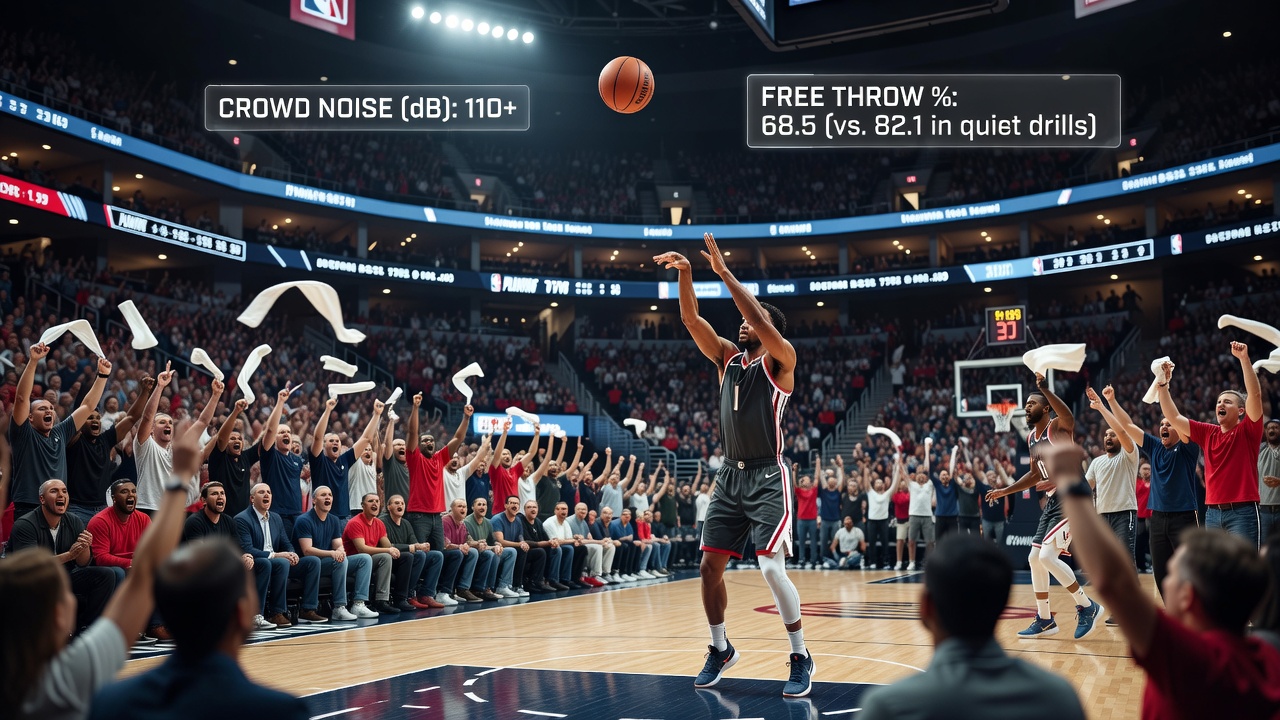
Playoff basketball brings elevated crowd volumes that often exceed 110 decibels during critical moments, and researchers have documented correlations between these sound levels and shifts in free throw accuracy across multiple postseason runs. Data compiled from NBA tracking systems shows visiting teams experiencing measurable drops in free throw percentages when arena acoustics amplify spectator reactions, while home squads maintain steadier conversion rates under identical pressure situations. Analysts tracking series from 2015 through 2025 note that the effect appears most pronounced in games decided by fewer than six points, where each possession carries heightened weight and noise interference compounds.
Tracking Acoustic Patterns Across Playoff Venues
Sound measurement studies conducted inside major arenas reveal consistent spikes during opposing free throw attempts, with decibel readings climbing sharply as fans coordinate chants and stomps. These patterns hold across Eastern and Western Conference matchups alike, and figures from arena sensors indicate that volume peaks align with moments when referees signal for quiet yet fail to fully suppress the roar. Observers monitoring player responses report that shooters adjust routines by extending their pre-shot pauses or altering breathing patterns, adjustments that sometimes coincide with altered release mechanics captured on high-speed cameras.
Statistical Evidence from Recent Postseason Data
League-wide statistics compiled by official tracking partners demonstrate that visiting free throw percentages dip by an average of 3.2 points during road playoff games compared with regular-season road contests, and researchers attribute portions of this variance to sustained crowd pressure rather than fatigue alone. Home teams, meanwhile, post conversion rates that remain within one percentage point of their season averages, suggesting an asymmetry in how acoustic environments affect concentration. One analysis of seven-game series found that teams forced to shoot over 25 free throws per game in hostile venues converted at rates 4.1 points lower than their established baselines, while the same players returned closer to normal figures once series shifted back to familiar surroundings.
Player Adjustments and Coaching Responses
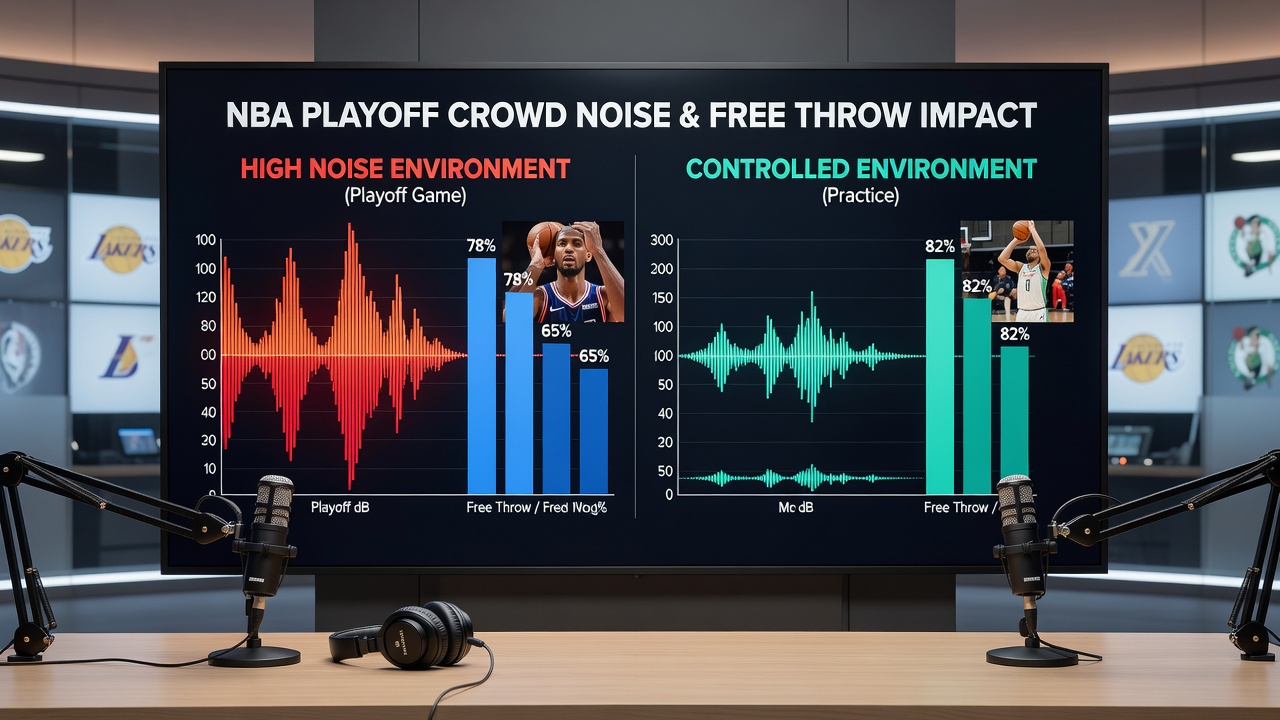
Coaching staffs prepare detailed scouting reports that include venue-specific noise profiles, and players receive training modules designed to simulate crowd interference through recorded audio played at comparable volumes. Those preparations show measurable results in controlled practice settings, yet game data indicates the transfer to live playoff environments remains imperfect. Guards and forwards who attempt the highest volume of free throws during the regular season appear slightly more resilient, maintaining conversion rates within two points of their norms even amid elevated decibel counts, whereas role players and big men sometimes exhibit larger deviations when thrust into high-stakes shooting situations.
Comparative Analysis with Regular Season Environments
Regular season arenas rarely sustain the same continuous intensity for full 48-minute stretches, and comparative datasets highlight that free throw differentials shrink considerably outside the postseason. When researchers isolate games played before sparse midweek crowds versus packed playoff nights, the gap in road performance widens noticeably. Data from the 2024 and 2025 postseasons, for instance, showed visiting teams converting 74.8 percent of attempts during high-decibel stretches compared with 79.3 percent across quieter regular-season road games, a spread that aligns with acoustic modeling rather than travel or rest factors alone.
Broader Implications for Series Outcomes
Teams that generate higher free throw volume through aggressive attacking schemes sometimes mitigate the noise effect by creating more attempts overall, thereby reducing the relative impact of any single miss. Series that extend to six or seven games provide repeated exposure, and longitudinal tracking suggests players gradually adapt after initial road contests, with conversion rates climbing in later games of extended matchups. League medical and performance staffs continue monitoring biometric responses to sustained noise, examining heart rate variability and focus metrics that correlate with shooting outcomes in these environments.
Looking toward October 2026, when training camps open for the 2026-27 season, organizations are expected to incorporate updated acoustic simulation protocols based on the accumulated postseason findings. External resources such as detailed play-by-play archives and university-led sports science reports from North American research institutions supply the raw datasets that inform these evolving preparation strategies.
Conclusion
Comprehensive review of available tracking information confirms that crowd noise levels during NBA playoff series correspond with measurable changes in free throw percentages, particularly for visiting teams, while home squads display greater consistency. Continued collection of acoustic and performance data across future postseasons will allow for refined models that separate sound-related effects from other variables, providing clearer insight into how arena environments shape shooting outcomes at the line.