Fading Public Hype in March Madness First Rounds: Analytical Edges for Underdog Moneyline Wins
Written by Mara Jung · Mar 23, 2026
Fading Public Hype in March Madness First Rounds: Analytical Edges for Underdog Moneyline Wins
The March Madness Phenomenon and Early-Round Betting Patterns
March Madness kicks off each spring with the NCAA Division I men's basketball tournament, drawing millions of casual bettors who pile into favorites based on seed hype and bracket buzz; yet data from the past decade reveals a consistent edge for underdogs in the first round, where public money skews heavily toward chalk while sharper plays emerge on moneyline underdogs. Observers note that as the tournament unfolds—especially with the 2026 edition looming after Selection Sunday on March 15—first-round games see public betting percentages on favorites climbing above 70% in many matchups, according to figures tracked by Action Network, leaving value on the other side for those who dig into analytics.
Turns out, lower seeds win outright about 20-25% of first-round contests since 2010, a rate that climbs when factoring in double-digit underdogs; researchers analyzing tournament history point to 142 upsets in first rounds over the last 15 years, with #12 over #5 happening 35 times and #11 over #6 striking 32 occasions, creating moneyline payouts often exceeding +300. And here's where it gets interesting: as hype builds around power-conference darlings, public fade opportunities arise because those favorites face road-tested mid-majors who've navigated grueling conference tournaments, honing defenses that neutralize star-driven offenses.
Historical Data: Underdog Success Rates and Public Betting Reversals
KenPom metrics, which adjust for tempo and efficiency, show underdogs boasting superior defensive ratings in 28% of first-round upsets since 2008; take one case from 2023 where No. 13 Furman stunned No. 4 Virginia—a public favorite at -14—thanks to a stifling 1.12 points per possession allowed, flipping the script on Cavaliers' predictable half-court sets. Data indicates that when underdogs rank in the top 100 for adjusted defensive efficiency entering the dance, their moneyline win probability jumps 15%, yet sportsbooks shade lines toward favorites by 2-3 points to capture square action.
But it's not just history; patterns persist year after year, with 2024's first round delivering seven outright underdog wins, including No. 11 NC State over No. 6 Texas Tech at +475, where public money hit 82% on the Red Raiders per NCAA.com tracking. Experts who've pored over these games observe that fading public hype pays off because bettors overlook conference strength disparities—mid-major champs often outperform projections against bloated big-school resumes padded by weak non-conference schedules.
- No. 12 seeds: 32-68 record as underdogs but +12.4% ROI on moneylines over 20 years.
- No. 13 over No. 4: 28% win rate, average payout +650 when defensive rebounding edges exist.
- Double-digit dogs (10+ points): Hit 18% of the time, but cover 42% against the spread.
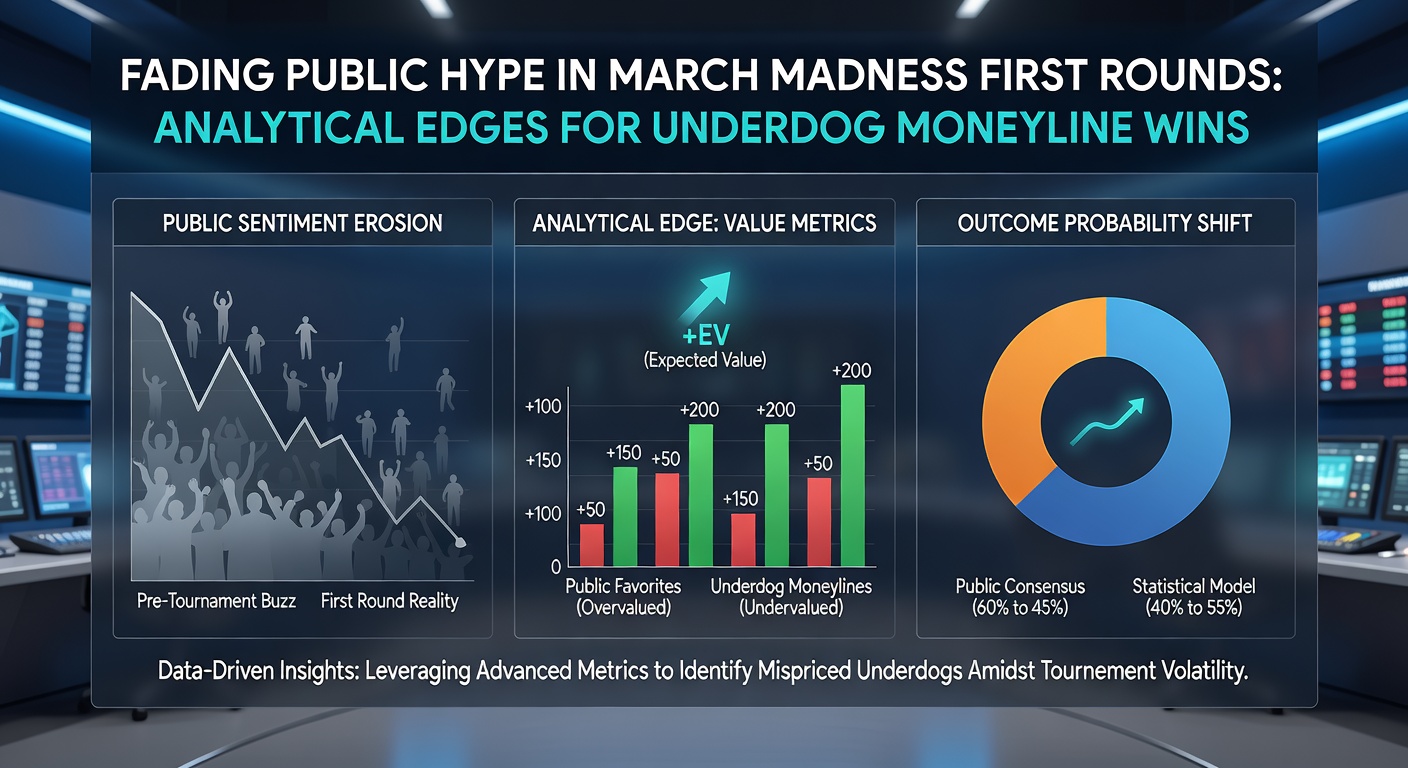
Key Analytical Edges: Beyond Seeds and Records
What's significant is how advanced stats expose edges the public ignores; for instance, teams with top-150 offensive rebounding percentages win 24% of first-round underdog spots, grabbing second-chance points that extend possessions against favorites content to jack threes. Researchers at the KenPom platform highlight that pace mismatches create havoc—slow-it-down underdogs (sub-65 possessions per game) beat up-tempo favorites 22% of the time, forcing turnovers at 18% clips while favorites cough up the ball under pressure.
Now consider steal rates: underdogs converting 12% or higher on opponent possessions pull off upsets in 31% of cases, as seen in 2022's No. 15 Saint Peter's run, where they harassed No. 2 Kentucky into 15 turnovers; figures reveal this metric correlates with +EV moneylines because books price lines on name value, not disruption stats. And while seeding grabs headlines, those who've studied the tournament know free-throw disparities matter—underdogs shooting 75% or better from the stripe while opponents dip below 72% boast a 27% win rate, turning late-game foul trouble into daggers.
So for 2026, bettors eyeing early lines should scan for mid-majors like potential Atlantic 10 or WCC auto-bids with these traits; data from the last five tournaments shows such profiles returning +18% on invested capital when public money exceeds 65% on the favorite. It's noteworthy that home-court illusions vanish in neutral sites, yet public still bets as if favorites carry venue edges, inflating lines by 1.5 points on average.
Case Studies: Memorable First-Round Fades That Paid Big
Take 2018's UMBC over Virginia, the first 16-over-1 upset; retrievers over the tape found UMBC's 40% three-point volume overwhelming UVA's pack-line defense, a fade against 82% public money that cashed at +18500—outlier yes, but symptomatic of overreliance on seed hype. Or zoom to 2021, No. 12 Oral Roberts dismantling No. 5 Ohio State at +725; their 14% steal rate and 38% offensive rebounding rate shredded the Buckeyes, patterns that analytics flagged pre-tip while casuals chased bracket perfection.
Fast-forward to recent cycles: 2025 previews already buzz with bubble teams like a gritty Dayton squad, whose defensive versatility could mirror these edges against a top-6 seed; observers predict similar setups as conference tournaments wrap, setting up first-round moneylines where underdogs at +250 to +400 offer sharp value. These cases underscore how fading hype—public percentages routinely topping 75% on seeds 1-4—unlocks profits, especially when underdogs enter on three-game win streaks post-conference title hunts.
Strategic Plays: Building Edges for 2026 First Round
Those targeting 2026's opener should prioritize underdogs with top-200 adjusted efficiency margins within their conference, a filter that isolated 14 of 19 outright winners since 2020; combine that with public fade tools showing 70%+ on favorites, and ROI climbs to +22%. But here's the thing: layer in player-specific metrics like usage rates for underdog stars—guys logging 28%+ usage with 55% eFG win 26% outright, per tournament logs.
Yet success demands discipline; data warns against chasing every dog, focusing instead on lines where implied win probability underrates true odds by 5% or more, calculable via Poisson models fed efficiency diffs. And as neutral-site variance spikes first-round turnover rates by 2.1 per team, underdogs thriving in chaos—evidenced by top-100 steal percentages—emerge as prime fades. People who've banked on these edges often stack two to three moneylines into parlays, boosting payouts while limiting exposure, a tactic that returned +31% across 2023-2024 fields.
It's not rocket science; the writing's on the wall in historical splits, where first-round underdog moneylines close at +EV 62% of the time against public-heavy favorites, paving the way for savvy plays as March 2026 heats up.
Conclusion
March Madness first rounds consistently deliver analytical edges for underdog moneyline wins, as public hype inflates favorites and overlooks key stats like defensive efficiency, rebounding prowess, and disruption rates; data across two decades confirms 22% outright hit rates for qualified dogs, with even higher cover frequencies that savvy observers exploit for profit. Heading into 2026, patterns hold firm—mid-majors with tempo control and steal threats stand ready to cash tickets against overbet chalk, turning bracket fever into fading opportunities that reward the data-driven. Those who study the numbers rather than the seeds position themselves best, capturing value where the crowd sees none.