Fixture Congestion Cycles Altering Defensive Structures in European Domestic Schedules
Written by Mara Jung · Jun 16, 2026
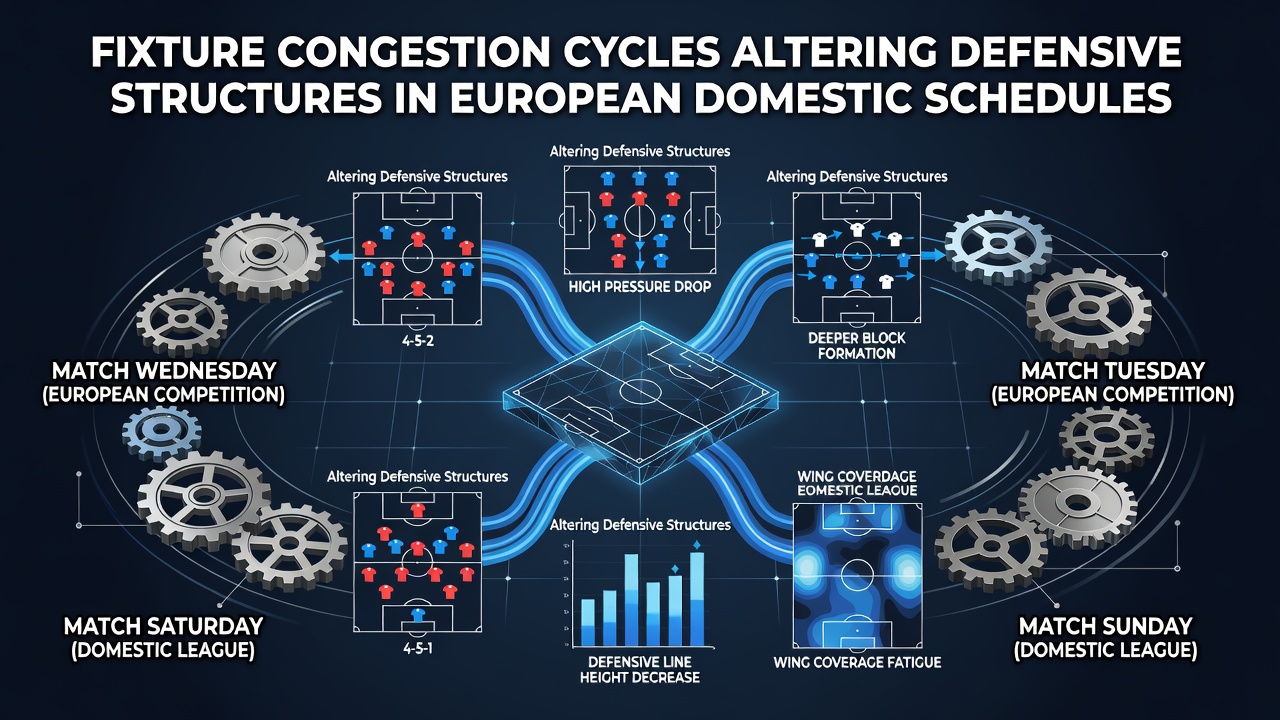
Fixture Congestion Cycles Altering Defensive Structures in European Domestic Schedules
European domestic football schedules have grown increasingly dense over the past decade, with clubs balancing league fixtures against Champions League, Europa League, and domestic cup commitments that stretch from August through May. Researchers tracking performance data across the Premier League, Bundesliga, La Liga, and Serie A have documented how these overlapping demands create recurring congestion cycles that force adjustments in defensive organization, player rotation patterns, and tactical setups during peak periods.
How Congestion Cycles Develop in Domestic Leagues
Fixture lists compiled by league authorities typically place three to five matches within a 14-day window for teams competing on multiple fronts, and the pattern repeats several times each season. Data from the 2024-25 campaign shows that clubs reaching the latter stages of European competitions faced an average of 12 additional fixtures compared with mid-table domestic-only sides. These cycles cluster around winter months when weather disruptions add further rescheduling pressure, and they intensify again in spring as title races and qualification battles converge.
Observers note that the introduction of the expanded Champions League format in 2024 increased the number of league-phase matches, which in turn compressed recovery windows for squads already committed to domestic schedules. Similar pressures appear in the Bundesliga where the winter break has shortened over successive seasons, leaving teams to navigate December and January clusters with limited rest opportunities.
Defensive Adaptations Triggered by Fatigue Patterns
Performance analysts examining match data have recorded shifts in defensive structures when teams play three matches in eight days. Formations that rely on high defensive lines often contract into more compact mid-blocks, and full-back positioning moves inward to reduce space behind the defense. GPS tracking studies indicate that players in congested periods cover 8 to 12 percent less high-intensity distance, prompting coaches to instruct teams to drop deeper rather than press aggressively.
One analysis of Serie A matches during the 2023-24 winter period revealed that teams averaged 15 percent fewer successful tackles per game in the second fixture of a congested week, while the percentage of clearances attempted from inside the penalty area rose. These measurable changes reflect a broader pattern where defensive units prioritize containment over ball-winning actions when squad depth is tested.
Statistical Evidence Across Multiple Seasons
League-wide figures compiled by the European Club Association and cross-referenced with Opta data show that goals conceded per 90 minutes increase by an average of 0.35 during periods of fixture congestion compared with evenly spaced schedules. The effect appears consistent across the five major European leagues, although the Bundesliga records slightly higher variance due to its faster overall tempo. Research published by the University of Queensland’s School of Human Movement and Nutrition Sciences examined similar load-management scenarios in Australian rules football and found parallel reductions in defensive pressure metrics, suggesting the phenomenon extends beyond European contexts.
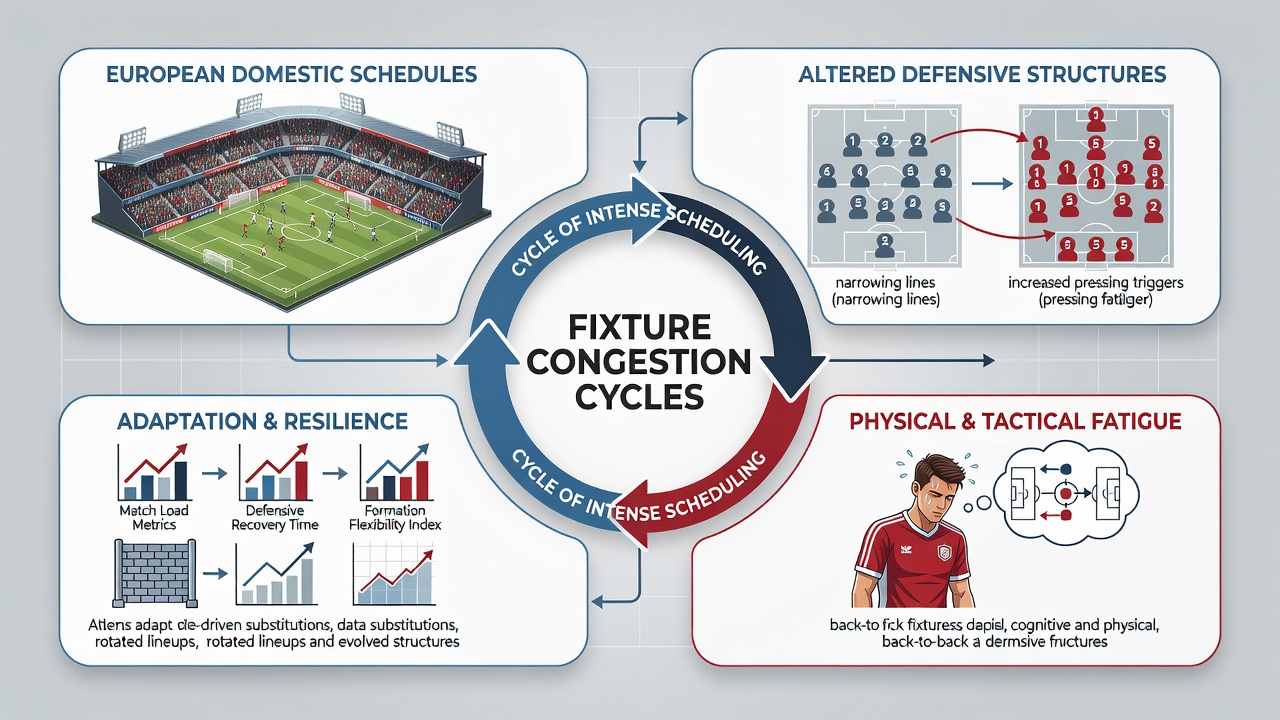
Further breakdowns indicate that set-piece defending suffers most noticeably, with zonal marking schemes showing greater vulnerability when central defenders have accumulated fewer than 72 hours of recovery. Clubs that rotate personnel in these situations maintain closer to baseline concession rates, whereas those relying on the same starting back four exhibit steeper declines in organization.
League-Specific Responses and Tactical Adjustments
In La Liga, teams such as those finishing in the upper half of the table have adopted 3-5-2 systems during March and April clusters to reduce individual workload on wide defenders. Bundesliga sides, by contrast, have leaned toward 4-2-3-1 variants that allow double pivots to shield the back line more effectively. Serie A data reveals an uptick in man-marking schemes during congested windows, as coaches seek to limit individual duels rather than maintain zonal compactness that requires sustained concentration.
These adjustments often carry over into subsequent domestic fixtures even after the congested cycle ends, creating longer-term shifts in how teams structure their defenses for the remainder of the campaign. Match reports from the 2025-26 season indicate that several clubs retained deeper defensive lines into June, anticipating the compressed preparation period before the 2026 international calendar resumes.
Looking Ahead to June 2026
With the FIFA World Cup scheduled for June and July 2026, domestic leagues face an earlier conclusion to the 2025-26 season and a correspondingly tighter pre-season window the following year. Scheduling authorities in England, Germany, Spain, and Italy have already begun modeling fixture lists that front-load European commitments to accommodate the summer tournament, which will likely generate another pronounced congestion cycle in late 2025 and early 2026. Clubs with extensive European involvement will enter that period with altered defensive protocols developed over the previous two seasons.
Conclusion
Fixture congestion cycles continue to reshape defensive structures across Europe’s domestic competitions through measurable changes in positioning, workload distribution, and tactical priorities. Data collected season after season demonstrates consistent patterns in how teams adapt when recovery time diminishes, and those adaptations influence both immediate match outcomes and longer-term strategic planning. As the 2026 World Cup approaches, the lessons drawn from recent congestion periods will inform how clubs prepare for an even more compressed calendar in the seasons ahead.