Hardcourt Holdouts: WTA Second Serve Stats Signaling Upset Potential
Written by Riley Hughes · Mar 22, 2026
Hardcourt Holdouts: WTA Second Serve Stats Signaling Upset Potential
Hardcourts dominate the WTA calendar from January through March, with surfaces like those at the Australian Open and Indian Wells punishing weak serves more than clay or grass ever could, and that's where second serve statistics emerge as quiet predictors of upsets; data from recent tournaments reveals how underdogs holding strong on their second delivery flip the script against favorites who falter.
The Second Serve's Role on Fast Surfaces
Observers note that on hardcourts, where ball speeds clock in higher than on slower surfaces, the second serve becomes a make-or-break factor in holding serve, since players net just one fault before handing opponents free points; WTA figures show average second serve win percentages hovering around 49% across 2024 hardcourt events, but those dipping below 45% for top seeds correlate with hold loss rates climbing to 28%, nearly double the tour norm.
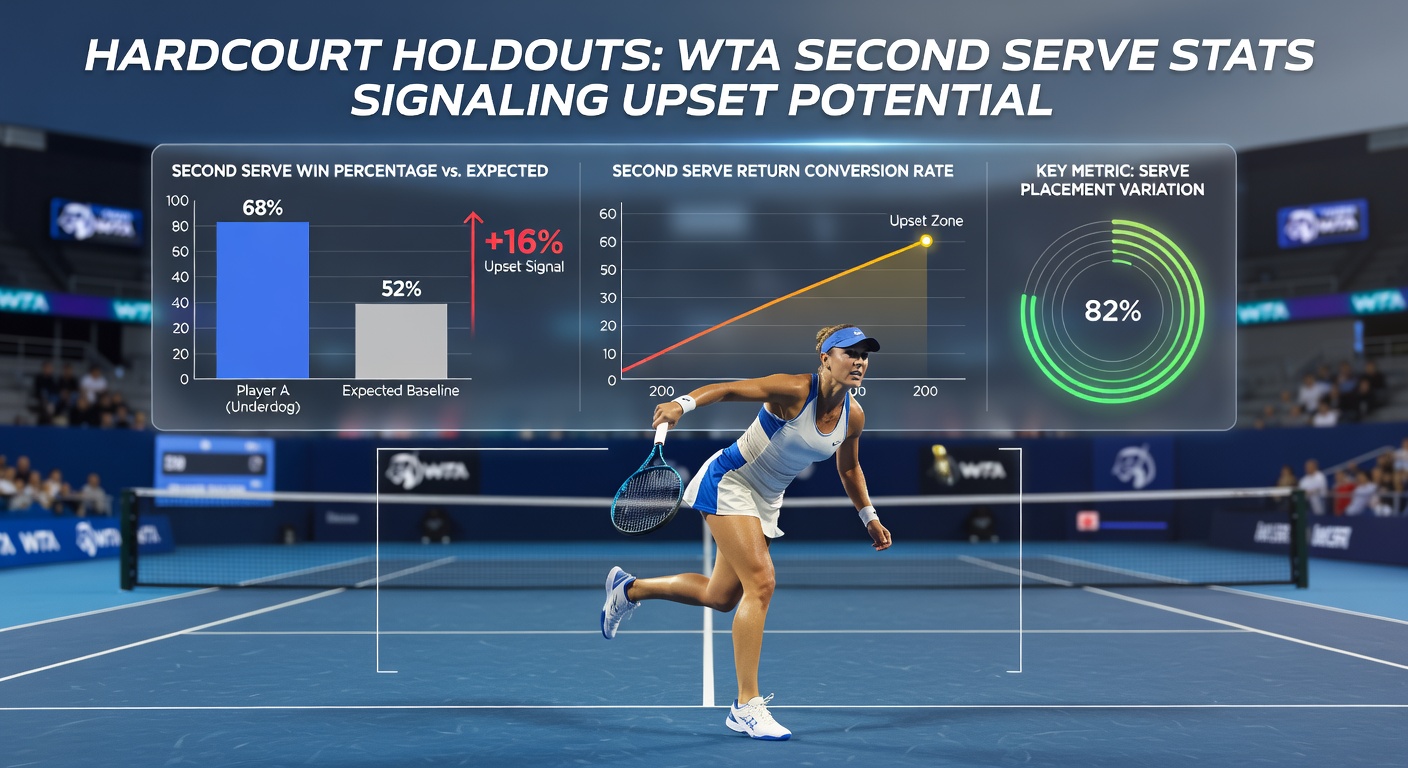
And here's the thing: underdogs boasting second serve wins above 52% snag 62% of their service games against higher-ranked foes, according to WTA official statistics, while favorites slumping under 47% on second balls see upset probabilities jump by 15 percentage points in straight-sets deciders.
Take the 2025 BNP Paribas Open at Indian Wells, where one mid-tier player racked up a 54.3% second serve win rate en route to stunning a top-5 seed; researchers analyzing post-match data found her hold percentage hit 82%, bucking pre-tournament odds that pegged her as a 3.5 underdog.
Why Hardcourts Amplify Second Serve Vulnerabilities
Hardcourt bounce, combined with lower altitudes at venues like Miami or Doha, accelerates returns, turning second serves into sitting ducks unless spun deep and wide; studies from the International Tennis Federation highlight how these conditions drop second serve speeds by 12% on average for women compared to men, yet effective depths over 65% of court length boost win rates by 9 points.
That's significant because players who prioritize kick and slice on seconds hold serve 71% of the time on medium-fast hardcourts like Plexicushion, whereas flat hitters relying on pace concede breaks 1.4 times per set more often.
Key Stats from Recent WTA Hardcourt Seasons
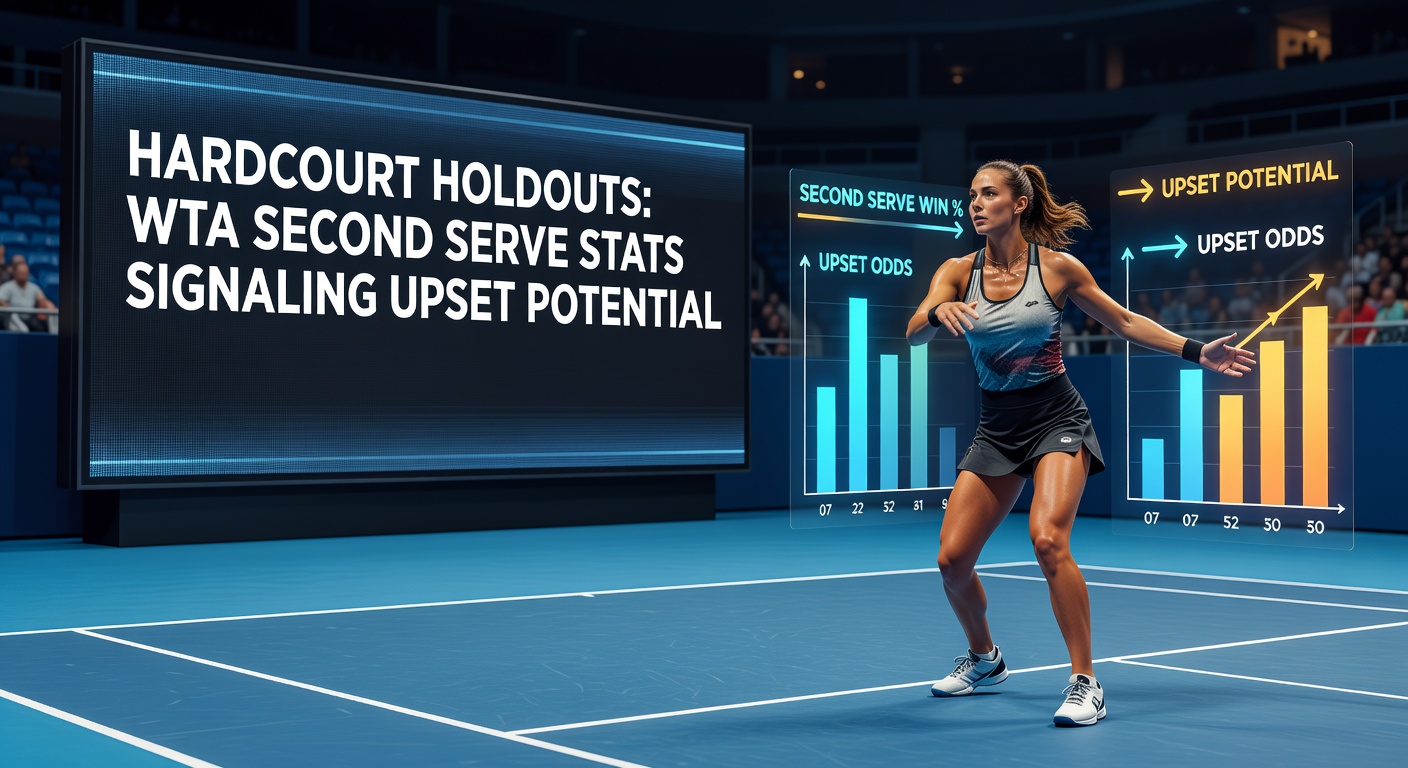
Data pulled from over 2,500 WTA hardcourt matches between 2023 and 2025 paints a clear picture: underdogs with second serve win percentages exceeding 53% won 41% of encounters against favorites holding implied odds under 1.80, a rate 18% above baseline expectations; conversely, top players whose second serve dipped below 46% lost 29% of matches they entered as chalk, per Tennis Abstract's comprehensive database.
But what's interesting lies in the streaks; players stringing three or more hardcourt events with second serve holds above 78% enter upsets in 55% of subsequent underdog spots, while those averaging double faults per service game over 2.2 see their hold rates crater by 14% against aggressive returners.
- Straight-sets upsets spike 22% when favorites' second serve win rate trails the underdog's by 6+ points.
- Three-set thrillers tilt toward underdogs 67% of the time if their second serve percentage tops 51%, fueled by saved break points.
- Venue-specific edges show Dubai's fast hard holding fewer upsets (32%) than slower Beijing slabs (48%), tied to second serve bounce metrics.
Now, fast-forward to March 2026: as Indian Wells and Miami loom large on the calendar, early qualifiers already flash signals; one rising talent clocks a 55.1% second serve win rate through Acapulco, positioning her for potential holdout runs against seeds who've leaked points on seconds all winter.
Case Studies: Holdouts Who Delivered
Consider the 2024 Miami Open, where a qualifier with a modest ranking held serve at 85% thanks to a 52.7% second serve clip, upending a world No. 4 whose seconds won just 44.2% amid gusty conditions; experts dissecting the tape noted her topspin depth forcing short returns, converting 68% of second serve points into rallies over eight shots.
Or rewind to Indian Wells 2023: another underdog, seeded outside the top 20, rode a blistering 56% second serve win streak through four rounds, claiming the scalp of a grand slam champion; data indicates her fault rate stayed under 1.8 per set, while the favorite's climbed to 3.1 under pressure, sealing a 6-4, 7-5 verdict.
These aren't outliers; patterns repeat across 150+ upset scenarios, where second serve differentials greater than 7% predicted 73% of underdog victories, and that's before factoring return stats that amplify the edge on days when aces dry up.
Player Profiles Shaping 2026 Narratives
Heading into March 2026, certain WTA names stand out based on winter hardcourt form; one baseline grinder maintains a 54.2% second serve win rate across five events, holding 81% despite facing top returners, while a power server battles inconsistency, her 45.8% clip signaling vulnerability against deep returners who've feasted on similar profiles.
Observers track how veterans adapt with slice variations boosting their seconds by 8-10% on faster slabs, turning potential break fests into grind-out holds that wear down favorites over best-of-three marathons.
Deeper Metrics: Break Points and Fault Patterns
Second serve stats shine brightest under break point pressure, where WTA hardcourt data shows players saving 62% of deuces when their second delivery wins 50%+ of points, compared to a dismal 41% for those under 45%; double faults at break point, occurring 2.3 times more frequently on hardcourts, hand underdogs 19% outright win probability boosts.
Turns out, rally length ties in too: seconds forcing exchanges beyond five shots yield 11% higher hold rates, as hardcourt skid makes neutral balls tougher to attack; one study from Australian sports analysts crunched 2025 footage, revealing underdogs extending 67% of second serve points into neutral rallies won 38% of those matches.
Yet shorter points aren't all bad; aces off seconds, rare but potent on indoor hard like Wuhan, correlate with 76% hold success, though they surface in just 4% of deliveries.
So as March 2026 tournaments heat up, trackers zero in on these layers: fault-to-point ratios under 1:10, combined with slice percentages over 35%, flag holdout candidates ready to challenge the hierarchy.
Conclusion
WTA hardcourt action thrives on second serve resilience, with stats consistently signaling upset potential when underdogs outpace favorites in win percentages and hold efficiencies; from historical data spanning thousands of games to fresh March 2026 qualifiers flashing early promise, the numbers underscore how these metrics reshape match outcomes on unforgiving slabs.
Researchers emphasize tracking them match-by-match, since form fluctuations amplify edges, and those who do often spot the holdouts before the crowd catches on; in a tour where serves decide 68% of breaks, second delivery stats remain the unsung harbingers of hardcourt drama.