How Elevation Changes Alter Scoring Dynamics in South American League Encounters
Written by Mara Jung · Jun 7, 2026

How Elevation Changes Alter Scoring Dynamics in South American League Encounters
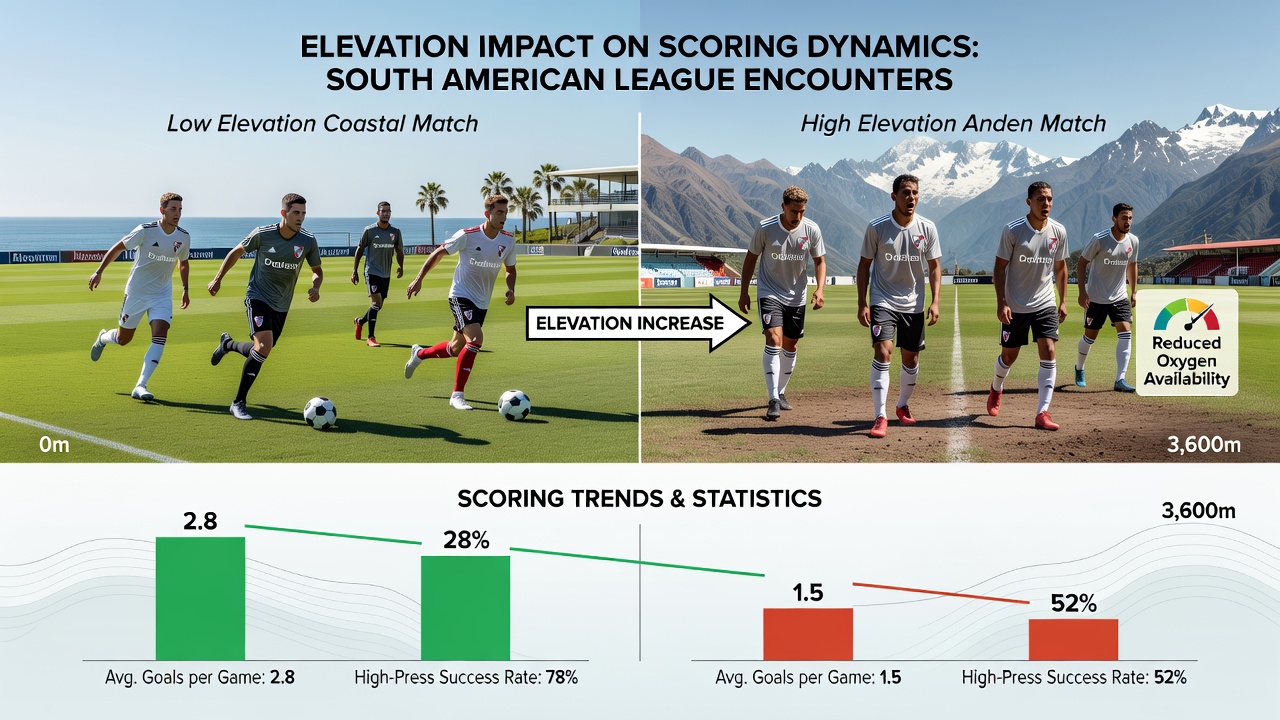
High elevation venues across South America reshape match outcomes through measurable shifts in player endurance and ball trajectory, data from league records show. Matches in cities above 2,500 meters often produce distinct goal patterns compared with sea-level fixtures, according to performance analyses compiled by regional football federations.
Teams competing at altitude face reduced oxygen availability that elevates heart rates and accelerates fatigue during the second half. Observers note that visiting sides from lower elevations record fewer shots on target after the 60-minute mark, while home squads maintain higher pressing intensity throughout full 90-minute periods.
Physiological Demands at Altitude
Medical studies conducted by South American research institutions document how players arriving from coastal regions experience a 10 to 15 percent drop in aerobic capacity during initial exposure to sites such as La Paz or Quito. Recovery intervals between sprints lengthen noticeably, and total distance covered declines in the final 30 minutes of play. League tracking systems capture these changes through wearable devices that log heart-rate variability and GPS movement data across multiple seasons.
Acclimatization protocols adopted by several clubs involve arrival three to four days before kickoff, allowing partial adaptation of red-blood-cell counts. Figures from the Bolivian and Ecuadorian top divisions reveal that sides following structured altitude training schedules concede fewer late goals than those flying in on match day.
Aerodynamic Shifts in Ball Behavior
Thinner air at elevation reduces drag on the ball, enabling passes and shots to travel farther and faster than at lower altitudes. Researchers from the University of Buenos Aires measured average shot speeds increasing by roughly 8 percent during tests at 3,600 meters compared with simulations at sea level. Goalkeepers adjust positioning because trajectories flatten and dip less sharply, altering expected save percentages in high-altitude stadiums.
Crosses and long-range attempts become more effective weapons for home teams familiar with these conditions. Match statistics compiled over five seasons indicate that set-piece goals rise in proportion to venue height, while through-ball success rates dip due to the quicker pace of play.
League Data Patterns Across Seasons
Records from the Liga Profesional Boliviana show average goals per game reaching 3.1 in matches hosted above 3,000 meters, versus 2.4 in fixtures played below 1,000 meters. Similar trends appear in Ecuador's Serie A, where Quito-based clubs post higher scoring outputs at home than when traveling to Guayaquil. Peruvian Liga 1 encounters at Cuzco follow comparable distributions, with home sides converting more chances from distance.
These patterns hold across both regular season and Copa Libertadores group stages, where CONMEBOL scheduling places low-altitude teams in high venues during June 2026 qualifiers. Aggregated figures released by the confederation confirm that visiting teams average 0.8 fewer goals when playing at elevations exceeding 2,800 meters.
Tactical Adaptations Observed in Practice
Coaches respond by shortening passing sequences and favoring direct play when away from home at altitude. Midfielders drop deeper to conserve energy, creating space for wingers to exploit the extended range of diagonal balls. Data from video analysis platforms demonstrate that teams employing early crosses record elevated expected-goal values in high-elevation venues compared with possession-dominant styles.
Substitutions occur earlier for players showing elevated lactate thresholds, and water breaks become standard during warmer months. Brazilian and Argentine clubs traveling northward for continental ties have adopted pre-match hydration and breathing exercises, though the effectiveness varies by individual physiology rather than uniform league trends.
Impact on In-Game Metrics and Records
Possession percentages remain relatively stable across elevations, yet shot conversion rates diverge. High-altitude home teams generate more attempts from outside the box, and the proportion of goals scored from set pieces climbs steadily with venue height. Goalkeeper distribution choices also shift toward longer clearances that take advantage of reduced air resistance.
League tables compiled through June 2026 reflect these dynamics, with clubs based at altitude securing disproportionate points hauls at home despite facing technically proficient visitors. Injury logs indicate higher rates of muscle strains among non-acclimatized players, further influencing substitution patterns and late-match scoring bursts.
Conclusion
Elevation introduces quantifiable changes to scoring dynamics that appear consistently across South American league data sets. Physiological strain combines with altered ball flight to favor sides accustomed to high venues, while visiting teams encounter measurable disadvantages in endurance and shooting accuracy. Continued collection of GPS, heart-rate, and event data will refine understanding of these environmental effects in future campaigns.