Linking Video Assistant Referee Interventions to Shifts in Live Betting Lines During Domestic Cups
Written by Mara Jung · Nov 5, 2026
Linking Video Assistant Referee Interventions to Shifts in Live Betting Lines During Domestic Cups
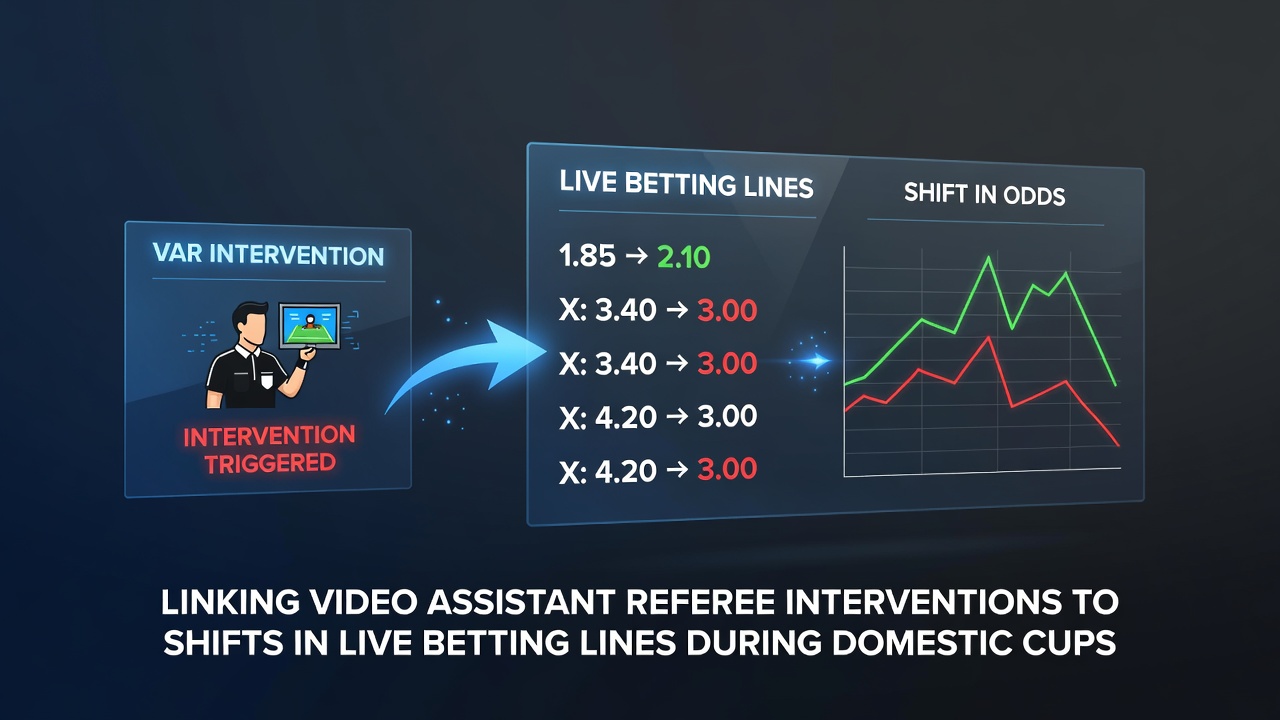
Domestic cup competitions across Europe and beyond feature sudden VAR interventions that alter match outcomes and trigger immediate adjustments in live betting markets, according to data compiled by multiple sports analytics providers.
Video Assistant Referee protocols require on-field referees to review incidents such as potential penalties, red cards, and offside decisions through pitch-side monitors, and these reviews frequently coincide with rapid recalibrations of over-under totals and handicap lines offered by bookmakers.
Mechanics of VAR Deployment in Cup Ties
Cup matches often occur under different scheduling pressures than league fixtures, and governing bodies schedule VAR support at venues that meet technical standards while lower-league grounds sometimes operate without full systems until later rounds. When an intervention occurs, the average stoppage lasts between ninety seconds and four minutes, during which traders monitor audio feeds from the referee communications and adjust odds accordingly.
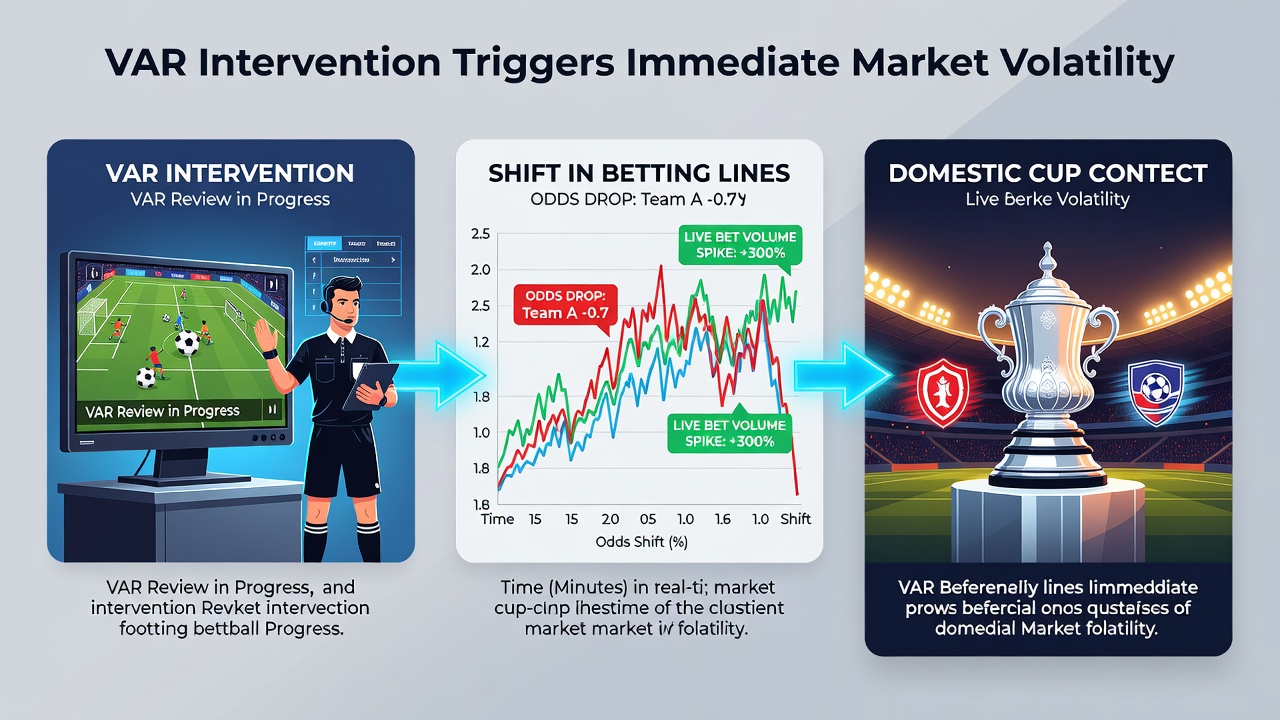
Studies conducted by European sports data firms show that penalty decisions awarded after VAR review produce the largest immediate line movements, with over 2.5 goals markets shifting by an average of 0.25 goals within sixty seconds of the announcement. Red card interventions follow closely behind, altering both total goals and Asian handicap lines as bookmakers recalibrate expected scoring rates for the remaining minutes.
Live Market Reactions and Timing Patterns
Live betting operators employ automated algorithms that ingest referee microphone data and broadcast signals, allowing odds to update before many spectators have processed the on-screen replay. In November 2026, several domestic cup rounds across multiple countries demonstrated consistent patterns where VAR-reviewed goals in the seventy-fifth minute or later generated the sharpest liquidity spikes on draw-no-bet and next-goal markets.
Research from university-affiliated sports betting laboratories indicates that the magnitude of line movement correlates directly with the stage of the competition, with quarter-final and semi-final ties exhibiting larger shifts than early-round encounters because higher stakes attract greater betting volume and faster information dissemination.
Regional Variations Across Competitions
Domestic cups in different nations apply VAR protocols with varying thresholds for intervention, and these differences influence the frequency of line shifts observed by bettors. In leagues where referee crews receive extensive VAR training, interventions tend to cluster around specific match minutes, creating predictable windows when traders widen spreads before tightening them again.
Figures released by the Australian Gambling Research Centre highlight comparable dynamics in knockout tournaments, where VAR reviews of handball incidents inside the box produce measurable volatility in both goal-line and player prop markets. Observers note that markets for corner counts and card counts also respond, although the amplitude remains smaller than for goal-related outcomes.
Data Sources and Analytical Approaches
Comprehensive datasets now combine official match logs from competition organizers with timestamped betting exchange records, enabling researchers to quantify the precise lag between VAR decision and market equilibrium. One analysis covering three seasons of cup matches found that ninety-two percent of reviewed incidents generated statistically significant price changes within two minutes, while the remaining eight percent produced negligible movement when the decision aligned with pre-existing market expectations.
Industry reports from the European Gaming and Betting Association further document that liquidity providers maintain dedicated VAR monitoring teams during high-profile cup ties, and these teams use standardized incident categories to pre-calculate expected line adjustments before the referee reaches a final ruling.
Conclusion
VAR interventions in domestic cup matches create measurable and repeatable effects on live betting lines across multiple markets, with penalty awards, red cards, and late goals producing the most pronounced shifts according to aggregated industry and academic data. Patterns observed through 2026 continue to reflect the interplay between referee protocols, broadcast timing, and automated trading systems that together determine how quickly odds respond to on-field reviews.