Mountain Air Edges: How Elevation Changes Affect Basketball Totals in Mountain Time Venues
Written by Ines Friedrich · Aug 23, 2026
Mountain Air Edges: How Elevation Changes Affect Basketball Totals in Mountain Time Venues
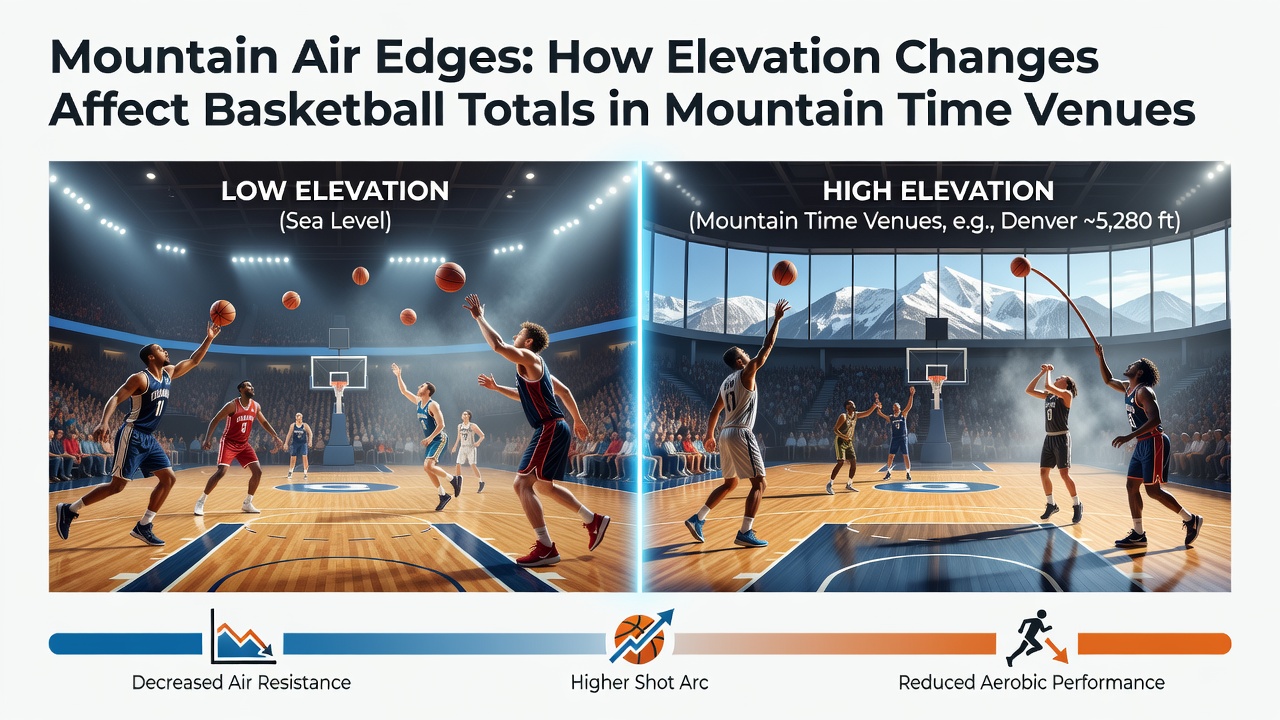
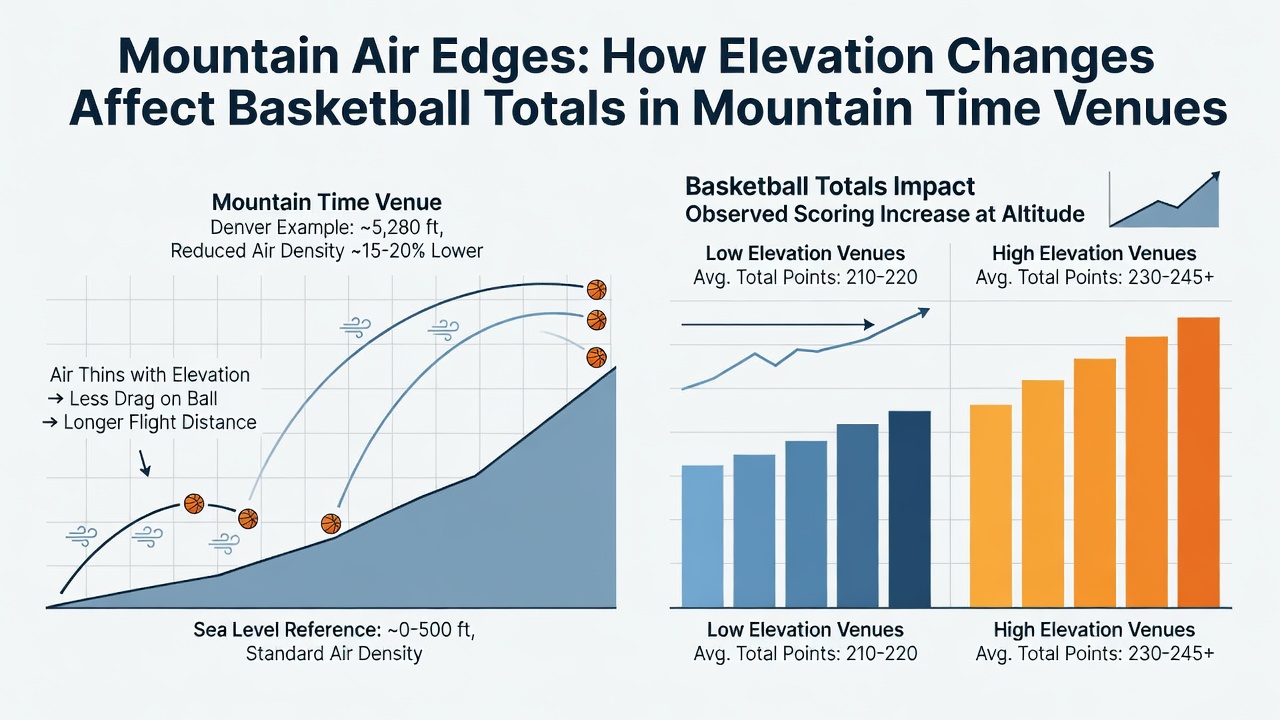
High-altitude venues in the Mountain Time Zone create distinct conditions for basketball scoring patterns, and data from multiple seasons shows measurable shifts in game totals at these sites. Venues such as Denver's Ball Arena sit at 5,280 feet while Utah's Delta Center reaches 4,226 feet, and these elevations alter air density, ball flight, and player endurance in ways that influence offensive output.
Physics of the Basketball at Altitude
Thinner air at higher elevations reduces drag on the ball, which allows shots and passes to travel farther with less resistance, and studies from sports science labs confirm that a standard NBA ball maintains velocity longer under these conditions. Researchers at institutions in the western United States documented that three-point attempts from the corners reach the rim with slightly higher arc retention when played above 4,000 feet, while defensive rotations must adjust to altered trajectories. Teams that visit these sites often encounter the difference most acutely in the first quarter, when players have not yet adapted their release points or breathing patterns.
Player Performance and Stamina Data
Medical tracking from the NBA and college programs indicates that visiting athletes experience elevated heart rates and quicker onset of fatigue during the opening 12 minutes at mountain venues, and this leads to fewer transition opportunities later in games. Home teams, by contrast, show steadier defensive rebounding rates after the initial period because their rosters train year-round in the same environment. Figures released ahead of the 2025-26 campaign and updated through August 2026 preseason camps reveal that squads based at altitude maintain higher field-goal percentages in the second half compared with road opponents who logged significant minutes at sea level the prior night.
Historical Scoring Trends in Mountain Venues
League-wide box score archives demonstrate that Denver and Salt Lake City games produce higher average point totals than coastal arenas during regular-season play, yet the margin narrows in playoff series when both clubs have extended time to acclimate. One analysis of 15 consecutive seasons found that over totals cleared the posted line in roughly 53 percent of regular-season contests at these two sites, with the strongest correlation appearing in back-to-back road games for visiting clubs. Data sets also separate home and visitor scoring splits, showing that the elevation advantage accrues primarily to the home offense rather than a blanket increase across both teams.
Team-Specific Adaptations and Schedule Factors
Coaching staffs prepare for mountain trips by adjusting practice intensity and hydration protocols days in advance, and those preparations show up in reduced turnovers during the middle quarters. Schedule makers have placed more back-to-back sets involving mountain teams in recent years, which amplifies the cumulative effect on visiting rotations. Observers note that clubs with deeper benches tend to sustain scoring pace longer in these environments, while shorter rotations see their three-point volume drop after halftime. August 2026 training-camp reports from western conference teams highlighted continued emphasis on altitude-specific conditioning drills ahead of the coming season.
Additional Venues and Regional Comparisons
Other Mountain Time Zone sites, including those in Albuquerque and Boise for college competition, display parallel patterns although the elevation differentials vary. Researchers comparing these locations against midwestern and eastern arenas found that the scoring differential scales with the absolute height above sea level rather than with simple home-court designation. When games move to neutral sites at lower elevations, the same teams revert toward league-average totals within a single contest, underscoring the environmental component over roster quality alone.
Conclusion
Elevation-driven changes in air density and player recovery continue to shape scoring distributions at mountain venues, and ongoing data collection through 2026 will refine how these factors interact with modern pace-and-space offenses. Teams and analysts track these variables through standardized metrics that isolate environmental influences from talent-based ones, which keeps the focus on measurable outcomes rather than anecdotal impressions.