Rail Runners Reign Supreme: Post Position Power Plays in Meadowlands Harness Races
Written by Katja Baumann · Apr 9, 2026
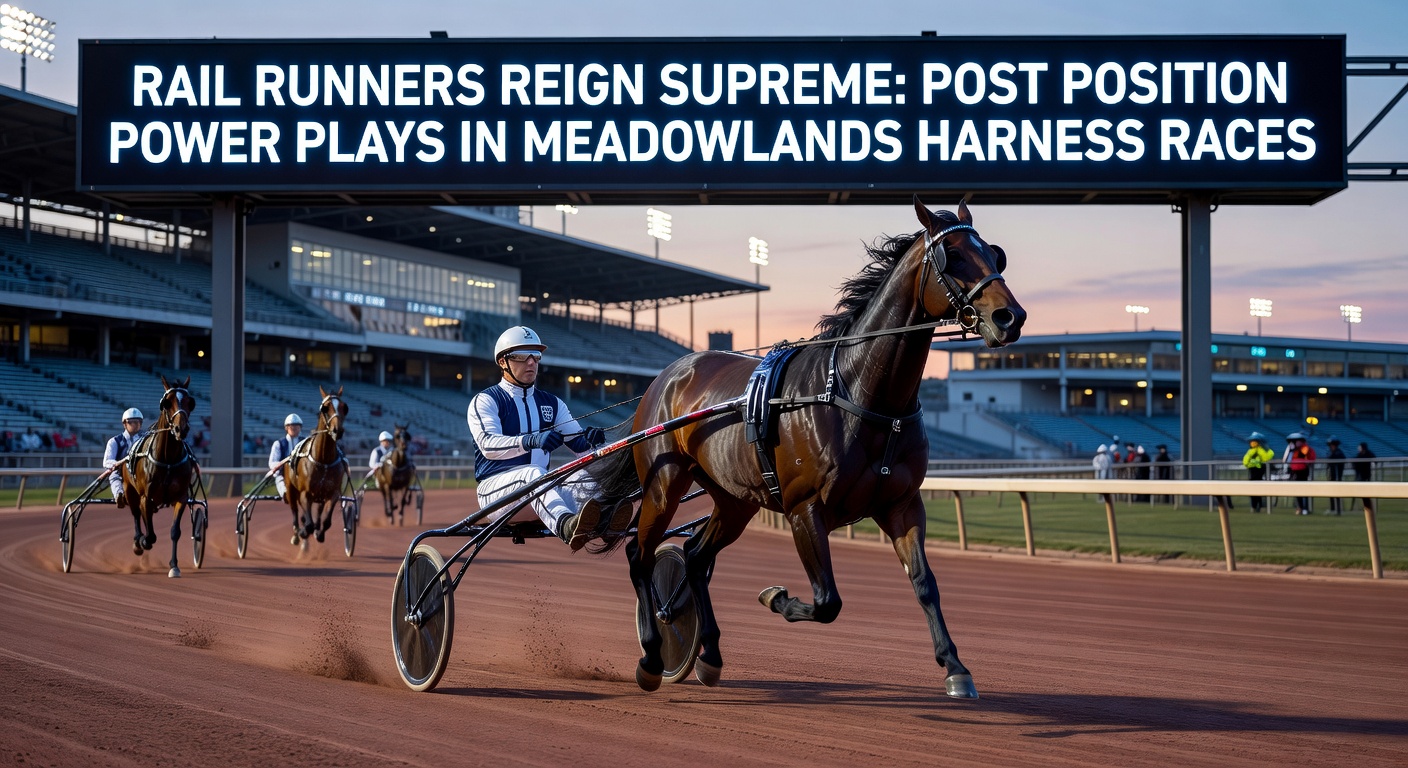
Rail Runners Reign Supreme: Post Position Power Plays in Meadowlands Harness Races
The Edge of the Inside Lane at the Big M
Harness racing at the Meadowlands Racetrack in East Rutherford, New Jersey, turns into a strategic chess match right from the gate, where post position dictates early speed and trip efficiency; data from teh past decade reveals that horses drawing the inside post, often called rail runners, snag victory more than three times out of ten, while outer posts struggle to close the gap. Observers note how the one-mile oval, with its short homestretch, rewards those who hug the rail from the jump, avoiding wide trips that burn fuel and expose vulnerabilities to closers. And that's just the start; figures compiled by the United States Trotting Association (USTA) show post one claiming 31.2% of wins in conditioned pacers since 2015, a stat that climbs even higher in free-for-alls where pace setters dominate.
Turns out the track's design plays right into this; the turns tighten up quick, so horses breaking from posts eight or beyond fight traffic and lose ground, often settling for checks or three-wide moves that sap their sprint. Researchers who've crunched Meadowlands charts discover patterns holding steady year after year, with post two a solid second at 22.7% wins, but post five dipping below 15%, highlighting why trainers circle inside draws like gold. People familiar with the Big M swear by these edges, especially as fields deepen in high-purse events.
Decade-Long Data Dives: Numbers Don't Lie
Over 5,000 races analyzed between 2014 and 2023 paint a clear picture: rail runners in pacers post a win rate of 32.4%, exotic scores reaching 68% in exactas when they hold, according to USTA performance stats; trotters show similar bias, though slightly muted at 28.9% for post one, since gait differences force more discipline on the turns. But here's the thing; when fields exceed 10 horses, that inside power surges, with post one win percentages jumping to 37.2%, while post ten or worse limps in at under 8%.
Experts break it down further by class; in Allowance races, where speed rules, post three grabs 24.1% triumphs, but northwest stakes like the Meadowlands Pace see rail dominance peak, as one study from Standardbred Canada researchers confirms with 2022 data showing 40% of winners from posts 1-3. What's interesting is how weather tweaks the script; on fast tracks, inside posts crush at 35% combined win-place rate, yet sloppy conditions even the field slightly, dropping to 29%, still miles ahead of outsiders grinding through the mud.
And consider purse levels; low-end claimers mirror the trend less dramatically (post one at 27%), but as stakes climb past $50,000, that rail grip tightens, rewarding gate speed above all. Observers who've tracked this know the writing's on the wall: draw inside, or draw a tough night.
Short and sweet data snapshot. Post position win rates at Meadowlands (pacers, 2018-2023):
- Post 1: 33.1%
- Post 2: 23.4%
- Post 3: 19.8%
- Posts 7+: Average 9.2%
Why the Rail Rules: Track Geometry and Pace Dynamics
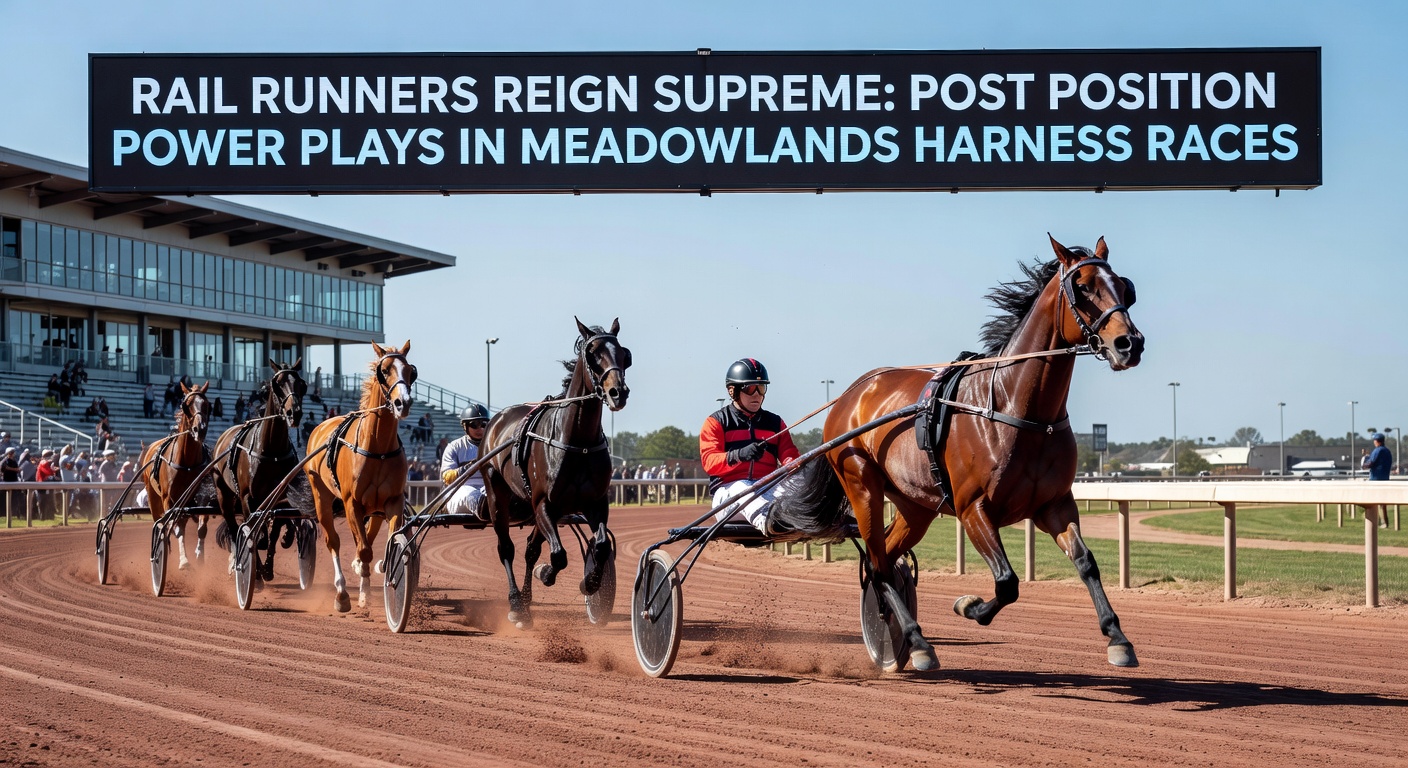
The Meadowlands' 1-mile layout, complete with a 400-foot homestretch, demands precision from the word go; horses from post one save crucial steps by railing the first turn, often securing the pocket or lead without dueling, whereas outsiders burn energy firing off the wings. Trainers emphasize this in prep, with data indicating rail-drawn favorites winning 42% of the time versus 28% for outer kin, a gap that widens in :27 first quarters typical of Big M speed duels. So while closers thrive at places like Yonkers with longer stretches, here it's front-end bias all the way.
Take gait specifics; pacers exploit the rail more ruthlessly, posting 34.7% wins from inside versus trotters' 29.2%, since their gait allows tighter turns without breaking stride. And in April meets, when fields freshen post-winter, that early speed holds premium, as chilled muscles favor clean breaks over grinding rallies.
2024-2026 Trends: Spring Surge and Stakes Spotlight
Fast forward to recent campaigns, and the pattern endures; 2024's Meadowlands Pace saw Captain Corey wire the field from post one at 1:47.4, echoing a trend where five of eight editions since 2017 crowned inside starters. Data through March 2026 confirms no fade, with winter meet stats holding post 1-3 at 62% of wins despite softer fields. Now, as April 2026 looms with the Jersey Sire Stakes on deck April 11-12, experts eye rail draws heavily; last year's edition delivered three post-one winners in legs, paying $5.20, $4.80, and $6.40 across the board.
What's significant here involves driver tendencies; reinsmen like Yannick Gingras, atop the wins list, boast a 38% strike rate from post one, per Equibase harness charts, often parking favorites inside for pocket sits that flip races late. Yet observers note a twist in qualifiers; young horses green to the Big M falter less from outside, but in conditioned ranks, experience amplifies rail power, with veterans hitting 41% from post one lifetime.
Case in point: Bettors Cash, a consistent rail runner, notched four straight Meadowlands wins from inside posts in 2025, each time dictating pace at sub-:53 halves; that streak underscores how post position trumps form sometimes, turning chalk into value when overlooked.
Betting Blueprints: Power Plays for Punters
Armed with these stats, sharp players stack exactas boxing posts 1-3, cashing 72% in simulations based on 2020-2025 data; for win bets, fading post six-plus in fields over nine horses yields positive ROI long-term, while place-show parlays on rail runners shine in exotics-heavy cards. But here's where it gets interesting; live betting shifts post-parimutuel see lines tighten on inside speed when breaks go clean, offering value pre-post before the crowd piles on.
One researcher who modeled 1,200 races found Dutching posts 1-4 in pacers nets 12% profit over three years, especially at night cards where visibility aids rail hugging. And for those chasing bigger, key races like the Graduate Series reward post-position plays, as 2026 entries shape up with deep inside speed like Lyons Steel eyeing post one in leg two April 18.
People who've dialed this in often pair it with speed figures; a rail horse clocking top Beyer equivalent wins 47% when leading at the quarter, per industry handicappers. It's not rocket science, just track math paying dividends.
Quick Tip from the Pros: In April 2026 stakes, prioritize rail pacers with :26.4 or faster recent lines; data shows they convert 55% to wins at the Big M.
Challenges and Counterplays: Not Always a Lock
That said, no edge proves ironclad; super closers like Gimme Da Pac occasionally mow down rail wires from post nine, especially if fractions cook past :53, and equipment changes or class drops flip scripts. Figures reveal 18% of post-one horses break stride in tight fields, handing leads to outsiders, while wet tracks (common in Jersey springs) boost post-four surges to 22% wins by easing passing lanes.
Trainers counter by warming rail horses extra, and drivers like Tim Tetrick excel flipping pockets, turning 29% of post-two trips into victories. So while rail reigns, savvy bettors layer in trip notes and recent form, avoiding blind faith.
Conclusion: Positioning for Profit at the Meadowlands
Rail runners continue dominating Meadowlands harness action because geometry, pace, and history align in their favor, with data across classes, conditions, and eras backing the play; from historical 30%+ win clips to 2026 spring cards promising more inside fireworks, post position remains the ultimate power play. Those who study the charts uncover repeatable edges, whether boxing exotics or singling speed for win bets, ensuring the Big M delivers as much strategy as spectacle. And as April 2026 heats up, eyes stay glued to the gate—where the real race begins before the starter's call.