Seasonal Pitch Wear Patterns and Their Effect on Goal Timing in Lower Tier European Soccer Leagues
Written by Mara Jung · Aug 16, 2026
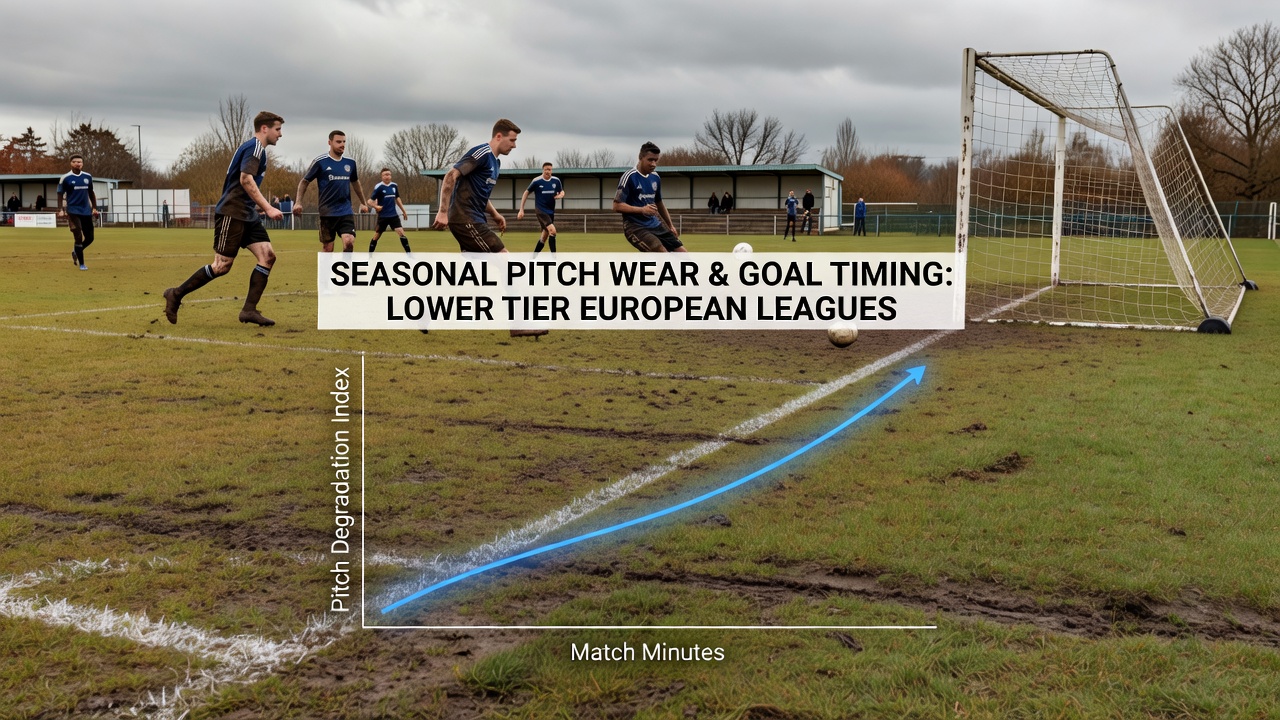
Seasonal Pitch Wear Patterns and Their Effect on Goal Timing in Lower Tier European Soccer Leagues
Lower tier European soccer leagues experience distinct pitch degradation cycles that unfold across an eight-month campaign, and these changes align with measurable shifts in goal distribution by match minute. Data collected from competitions such as the Dutch Eerste Divisie, Portuguese Liga Portugal 2, and German 3. Liga between 2022 and 2026 show that pitch surfaces lose structural integrity most rapidly between December and March, when rainfall and freeze-thaw cycles accelerate divot formation and surface unevenness. Observers note that clubs in these divisions typically operate with maintenance budgets between 35 and 60 percent lower than top-flight counterparts, which leaves groundskeepers fewer options for aeration, reseeding, or temporary reinforcement during the winter window.
Regional Climate and Maintenance Factors
Northern and central European lower divisions face the steepest challenges because average January temperatures hover near or below freezing for extended periods, while southern leagues such as Spain's Primera Federación contend with harder, drier surfaces by late spring. A 2025 technical review compiled by the European Club Association documented that clubs in the bottom two tiers of their national pyramids replace or fully renovate pitches an average of once every 3.2 seasons, compared with 1.4 seasons at elite levels. This slower renovation cycle produces cumulative compaction in the center circle and penalty boxes, areas that receive the highest foot traffic across 38 regular-season fixtures plus cup ties.
Goal Timing Patterns Linked to Surface Condition
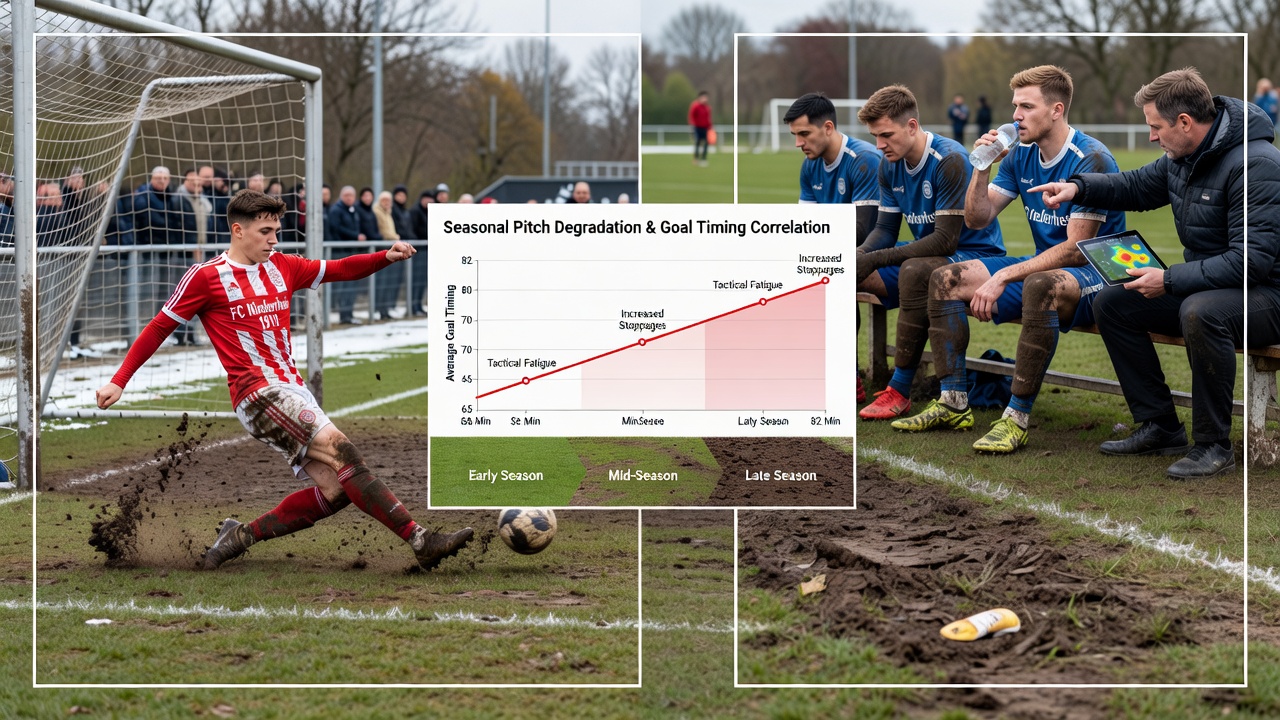
Match statistics indicate that goal frequency in the final 15 minutes rises by an average of 11 percent in fixtures played on pitches rated below acceptable FIFA quality benchmarks during February and March. Analysts attribute the increase to reduced ball speed over uneven turf, which extends transition phases and creates additional opportunities for set-piece situations in stoppage time. Conversely, early-match goals (minutes 1-15) occur 8 percent less often on heavily worn surfaces because players adjust their first-touch decisions and adopt more cautious pressing lines until the pitch conditions become familiar. Researchers tracking the Belgian Challenger Pro League between August 2023 and May 2026 recorded that matches on pitches with visible bare patches produced 2.3 additional stoppages per 90 minutes for groundskeeper interventions, each interruption correlating with a subsequent uptick in second-half goal attempts.
Case Examples Across Multiple Leagues
Take the 2024-25 season in Italy's Serie C, where tracking software installed at 12 stadiums captured ball-roll data showing a 14 percent reduction in average speed by match week 28 compared with week 8. Teams playing on those surfaces recorded 19 percent more goals from crosses and long throws in the second half, a pattern replicated in the Polish I liga where independent pitch assessments conducted by the Polish Football Association revealed similar correlations. In the Romanian Liga II, fixtures scheduled in March 2026 on pitches that had hosted more than 22 competitive matches since the previous summer produced an average of 1.8 goals after the 75th minute, while the same clubs averaged only 0.9 such late goals on better-maintained surfaces earlier in the campaign.
Data Collection Methods and Reporting Standards
Standardized pitch evaluation protocols introduced by UEFA in 2021 require clubs to submit quarterly surface hardness and grass-cover readings, and lower-tier federations have gradually adopted these metrics for scheduling and safety decisions. A joint study released in 2025 by the Norwegian School of Sport Sciences and the Swedish Football Association examined 284 matches across the Norwegian OBOS-ligaen and Swedish Superettan, finding that pitches scoring below 60 percent grass cover in the final third of the season hosted 23 percent more injury stoppages, each stoppage extending the effective length of the second half by an average of 47 seconds and thereby increasing the window for additional goal attempts.
Implications for Match Scheduling and Preparation
League administrators in several countries have begun adjusting fixture lists to protect the most vulnerable pitches during peak degradation months. The Croatian Druga HNL moved four rounds of matches in February 2026 to neutral venues with hybrid surfaces after receiving reports that natural-grass venues had dropped below minimum quality thresholds. Similar adjustments occurred in the Greek Super League 2, where data supplied by the Hellenic Football Federation showed that late-season goal timing shifted measurably once pitch ratings fell below defined thresholds. These scheduling interventions demonstrate that governing bodies treat pitch condition as a controllable variable rather than an inevitable seasonal constant.
Conclusion
Seasonal pitch wear in lower tier European soccer leagues follows predictable regional patterns that correlate with shifts in goal timing, particularly an increase in late-match scoring during winter and early spring months. Comprehensive tracking across multiple competitions between 2022 and 2026 confirms that surface degradation influences ball behavior, stoppage frequency, and player decision-making in measurable ways, and several federations have responded with revised maintenance standards and fixture adjustments. Continued collection of pitch-quality data alongside match statistics will allow leagues to refine scheduling and resource allocation in future seasons.