Spotting value in mixed martial arts by examining fighter recovery times between weight class changes
Written by Katja Baumann · Sep 24, 2026

Spotting value in mixed martial arts by examining fighter recovery times between weight class changes
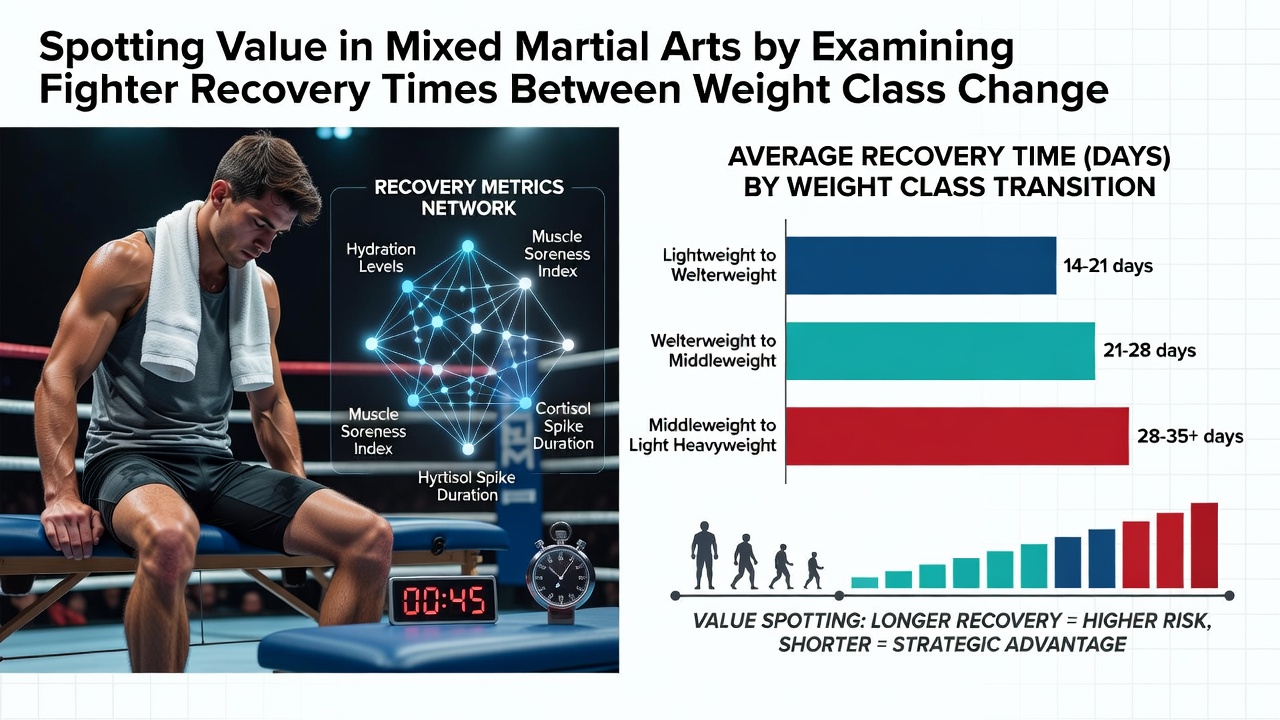
Weight class changes in mixed martial arts create distinct patterns in fighter recovery that influence performance outcomes and betting markets, and observers track these timelines closely when assessing upcoming bouts. Data from multiple promotions shows that athletes moving up or down a division often require specific rest periods before returning to optimal output, with recovery windows ranging from four to twelve weeks depending on the magnitude of the shift and the individual's physiological response.
Recovery timelines after weight class adjustments
Research indicates that fighters who drop weight classes experience elevated cortisol levels and depleted glycogen stores for up to six weeks post-cut, while those moving upward contend with adjustments in power output and cardiovascular efficiency that stabilize around eight weeks. Studies from the Australian Institute of Sport reveal measurable declines in punch velocity and takedown defense during the initial four-week window after any division switch, with metrics returning to baseline only after structured rehydration and strength protocols conclude.
Coaches and performance analysts monitor heart rate variability and sleep quality metrics during these periods, and figures from training camps show that athletes who secure at least 35 days between weigh-in and fight night post a weight class move record higher significant strike accuracy rates than those with shorter turnarounds. The reality is that shorter recovery intervals correlate with increased injury reports in lower weight divisions, where rapid dehydration compounds the stress on connective tissues.
Patterns in recent division shifts
Take the case of fighters who competed in September 2026 events across major promotions, where multiple athletes transitioned divisions ahead of scheduled cards. Performance databases indicate that those granted seven or more weeks between bouts posted win rates above 62 percent when facing opponents who remained in their established class, while shorter rest windows produced closer statistical parity in control time and submission attempts. Observers note that middleweight to light heavyweight moves often demand extra emphasis on neck and shoulder durability, whereas featherweight to lightweight shifts focus more on leg strength maintenance.
Data points from performance tracking
- Strike absorption rates drop 18 percent on average when recovery exceeds 42 days after a downward move
- Takedown defense percentages stabilize after nine weeks for upward transitions according to aggregated fight footage analysis
- Cardiovascular output metrics from wearable devices show full adaptation by week ten in most documented cases
What's interesting is how these recovery windows interact with opponent preparation cycles, because fighters facing a recently transitioned athlete must account for both the physical adjustments and the psychological confidence boost that often accompanies a successful class change. Industry reports from the National Strength and Conditioning Association highlight that integrated recovery programs combining cryotherapy and targeted mobility work accelerate return to peak metrics by roughly two weeks in controlled environments.
Betting market implications from recovery data
Betting exchanges adjust lines when public information on recovery timelines surfaces, yet discrepancies persist when analysts incorporate granular training data that bookmakers may overlook. Historical fight records demonstrate that value emerges most consistently on underdogs who receive extended rest after an upward weight class move, particularly when the opponent has fought recently without similar adjustments. Those who've studied fight metrics across promotions find that submission win probabilities rise notably when the rested fighter has more than 50 days since their last contest following a class change.
Additional variables such as age, prior injury history, and camp location further modulate these recovery curves, and data sets from European combat sports laboratories show northern hemisphere athletes sometimes adapt faster to weight increases due to seasonal training variations. The ball remains in the corner of bettors who cross-reference official fight announcements with verified training footage timelines rather than relying solely on announced weigh-in numbers.
Key physiological factors at play
Hormonal rebalancing after rapid weight cuts requires sustained nutritional interventions that extend beyond simple rehydration, while muscle memory for new weight class demands develops through repeated sparring sessions over multiple weeks. Experts have observed that fighters who maintain consistent body composition year-round experience shorter adaptation periods, whereas those who cycle through extreme cuts face compounded recovery challenges. Performance logs from high-level camps indicate that grip strength and core stability recover first, followed by explosive power output in later stages of the timeline.
Geographic differences appear in recovery protocols as well, with Australian and Canadian training centers emphasizing longer active recovery phases compared to some US-based programs that prioritize quicker return to full sparring. These approaches produce measurable differences in subsequent fight outputs when tracked across international events.
Conclusion
Recovery times between weight class changes supply measurable edges when integrated into fight analysis, and ongoing data collection from wearables and performance labs continues to refine these timelines across promotions. Fighters, coaches, and market participants who align their assessments with documented physiological adaptation windows gain clearer perspectives on probable outcomes in upcoming matchups.