Stadium Altitude Variations and Their Role in Adjusting Soccer Goal Expectations
Written by Ines Friedrich · May 17, 2026
Stadium Altitude Variations and Their Role in Adjusting Soccer Goal Expectations
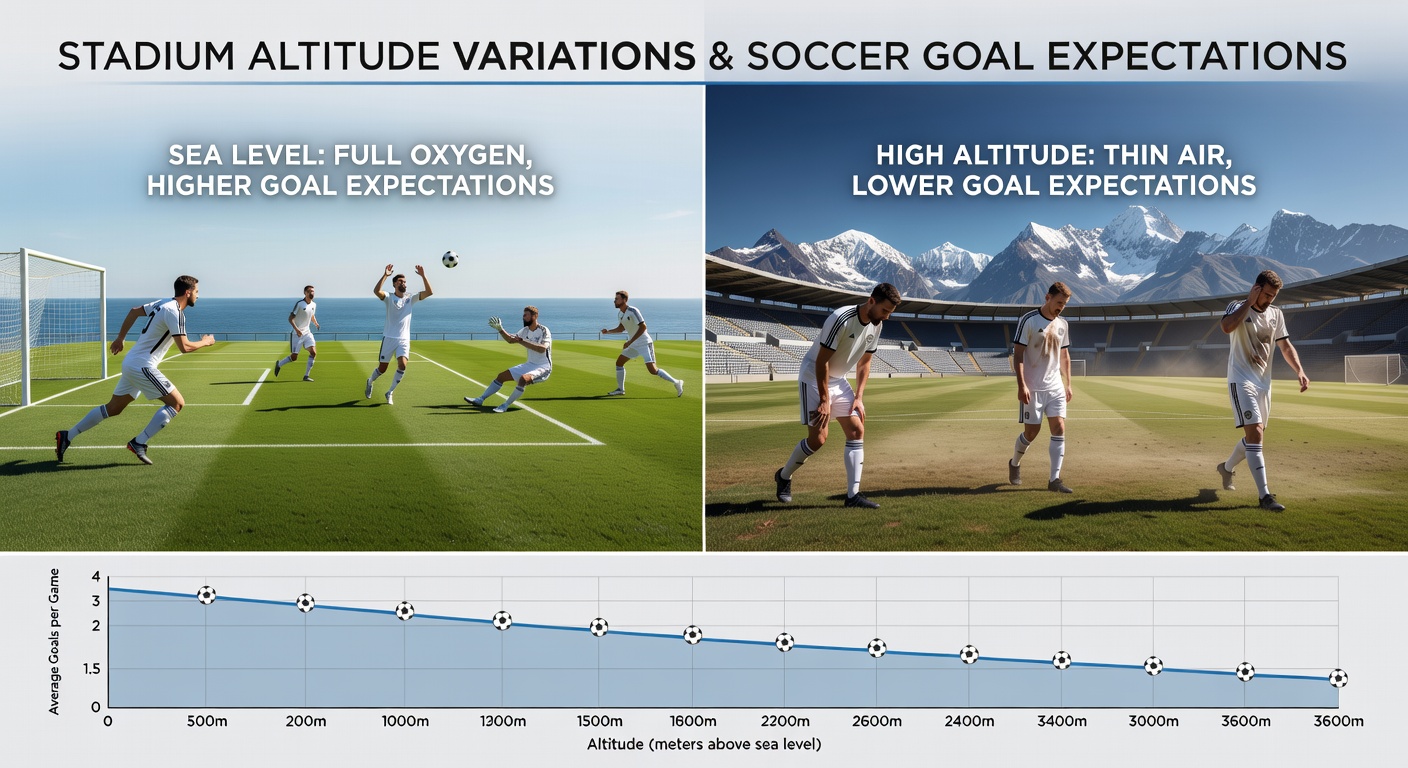
Stadiums situated at varying elevations create measurable differences in how soccer unfolds, particularly when it comes to goal scoring patterns and player performance metrics. Observers note that thinner air at higher altitudes allows the ball to travel farther and faster, while simultaneously reducing oxygen availability for athletes, which leads analysts to recalibrate expected goal totals before matches begin. Research from sports science laboratories demonstrates these effects through controlled studies that track ball trajectories and heart rate responses across sea-level and elevated venues.
Physical Mechanisms Behind Altitude Influences
Air density decreases as elevation rises, which reduces drag on the soccer ball and permits it to maintain speed over longer distances during passes and shots. Players experience quicker fatigue because each breath delivers less oxygen to working muscles, prompting teams to adjust pacing strategies from the opening whistle. Data collected during international qualifiers shows that matches hosted above 2,500 meters often feature elevated shot volumes in the first half followed by declining intensity after the hour mark, a pattern that statisticians incorporate into pre-match models when forecasting total goals.
Documented Examples from South American Competitions
Venues such as those in La Paz and Quito have hosted fixtures where goal tallies consistently exceed averages recorded at lower elevations, according to records maintained by the Confederación Sudamericana de Fútbol. Teams accustomed to thinner air maintain higher work rates throughout the ninety minutes, whereas visiting sides frequently record lower pass completion percentages after the initial thirty minutes. Analysts reviewing match logs from 2024 through early 2026 identify these trends as repeatable enough to justify specific adjustments in goal expectation calculations for both domestic leagues and continental tournaments.
Statistical Adjustments in Goal Expectation Models
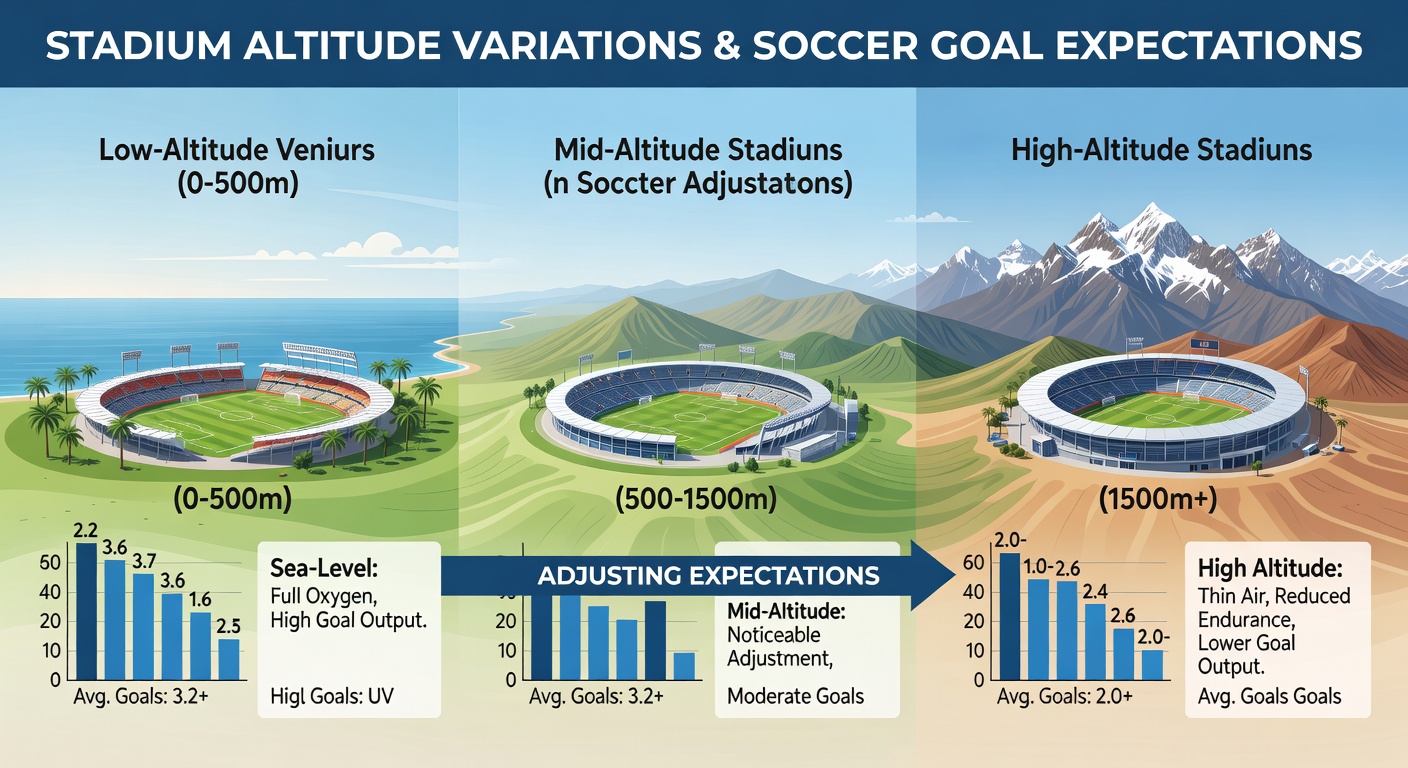
Modern analytics platforms integrate altitude coefficients into expected goals frameworks, weighting factors like average elevation, historical scoring rates at each ground, and player acclimatization data. These models produce revised over-under projections that differ from sea-level baselines by measurable margins, enabling more accurate comparisons across diverse stadium environments. Figures released by sports research groups indicate that venues exceeding 1,800 meters see an average increase of 0.4 to 0.7 goals per match when both sides possess similar squad depths and recent form.
Coaches prepare by scheduling training sessions at comparable elevations days before travel, a practice that partially mitigates the oxygen deficit but does not eliminate its influence on late-game decision making. Video analysis of past encounters reveals that set-piece conversion rates sometimes climb at altitude because the ball moves through the air with less predictable swerve, prompting defensive units to adopt more compact shapes near their own penalty area.
Regional Variations and League-Specific Patterns
European domestic competitions encounter altitude effects primarily during qualification ties or friendlies involving South American or African opponents, yet several clubs maintain detailed databases on how their players respond when matches shift to higher grounds. North American leagues, including those operating across the Rocky Mountain corridor, record similar deviations in scoring distributions during summer fixtures when heat compounds the challenges of reduced oxygen. Researchers comparing datasets from multiple continents find that acclimatized home sides generate more sustained pressure in the final third, while opponents register higher turnover counts after the sixtieth minute.
Upcoming fixtures scheduled for May 2026 will once again test these established patterns as several high-altitude venues host group-stage encounters, giving analysts fresh opportunities to validate existing adjustment formulas against new performance metrics. Pre-match reports routinely list altitude alongside weather and pitch conditions as core variables that shift projected goal outputs away from league-wide averages.
Player Physiology and Recovery Considerations
Medical staff monitor oxygen saturation levels and implement hydration protocols tailored to elevation, because dehydration accelerates the onset of fatigue that already arrives earlier at altitude. Studies conducted by exercise physiology departments at universities in both the Americas and Europe demonstrate that recovery intervals between high-intensity efforts lengthen noticeably above 2,000 meters, influencing substitution patterns and tactical shifts during the second half. Teams that rotate personnel more aggressively in these environments preserve defensive structure longer and reduce the number of counter-attack opportunities conceded.
Integration into Performance Forecasting Systems
Forecasting tools now embed altitude as a fixed parameter rather than an afterthought, allowing expected goal models to generate venue-specific outputs that account for historical deviations. League administrators and technical departments review these outputs when scheduling television windows or allocating rest days between matches that straddle significant elevation changes. The approach yields more consistent comparisons between performances delivered at contrasting stadiums, which in turn supports accurate evaluation of attacking output across an entire season.
Continuous monitoring through wearable technology supplies granular data on distance covered and sprint frequency, enabling real-time updates to in-game projections as matches progress at elevated sites. These updates help observers understand why certain teams exceed or fall short of pre-match goal expectations once altitude begins to exert cumulative effects.
Conclusion
Stadium altitude variations produce predictable shifts in soccer dynamics that analysts incorporate directly into goal expectation calculations. Physical changes in ball flight and player endurance combine to alter scoring distributions, and statistical models adjust accordingly using accumulated match data from venues worldwide. As competitions continue through 2026 and beyond, these adjustments remain essential for generating accurate performance forecasts across different elevation profiles.