Stadium Elevation Effects on Scoring Patterns in High-Altitude Basketball Games
Written by Mara Jung · Aug 4, 2026

Stadium Elevation Effects on Scoring Patterns in High-Altitude Basketball Games
High-altitude basketball venues create measurable shifts in scoring patterns, and data from professional leagues shows teams adapt their offensive and defensive strategies accordingly. Researchers track these changes through game statistics that compare performance at different elevations, revealing consistent trends across multiple seasons. Observers note that the thinner atmosphere alters both player physiology and equipment behavior, which in turn influences how points accumulate during matches.
Physiological Impacts on Player Performance
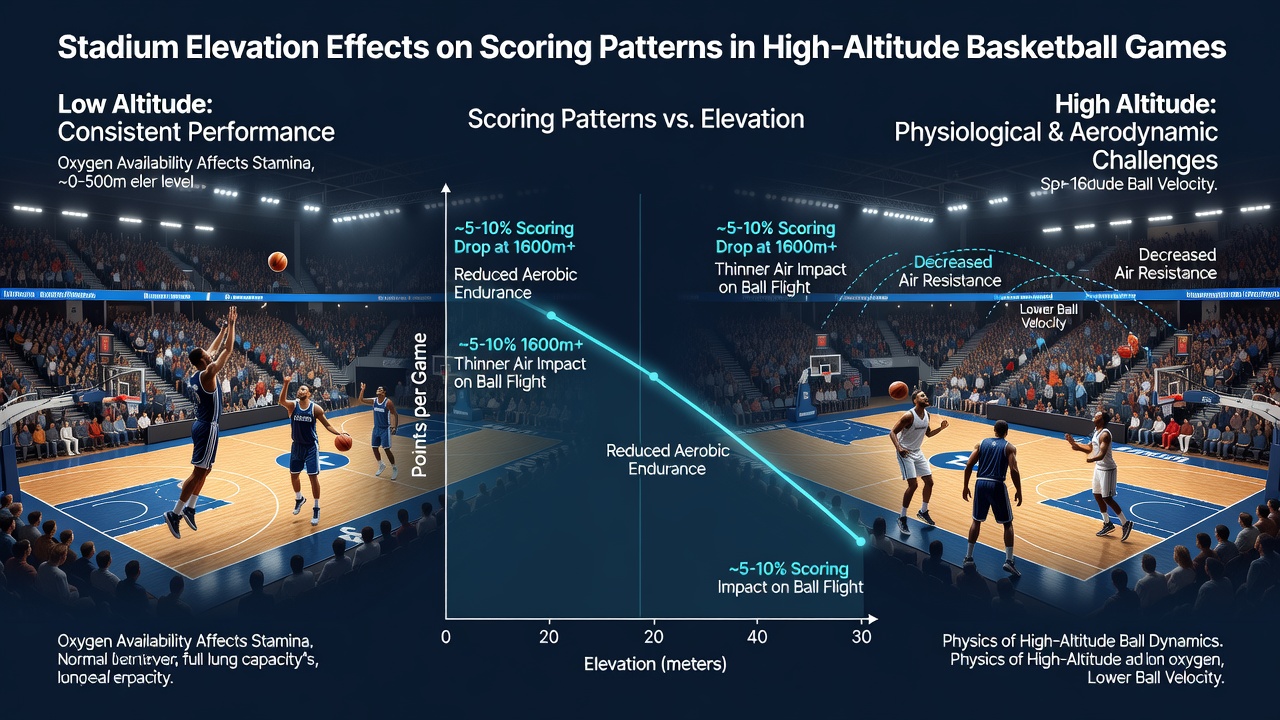
Players experience reduced oxygen availability at elevations above 3,000 feet, and this leads to faster fatigue during high-intensity plays. Studies from sports science programs indicate that cardiovascular strain increases because the body works harder to deliver oxygen to muscles, resulting in shorter bursts of explosive movement. Data collected from NBA teams shows visiting players often record lower field goal percentages in the fourth quarter when competing against home squads accustomed to the conditions. Training regimens that include altitude simulation help athletes build tolerance, although full acclimatization typically requires several weeks according to physiological research.
Ball Trajectory and Air Resistance Changes
Lower air density at higher elevations reduces drag on the basketball, allowing shots to travel farther with the same force. Engineers and biomechanics experts have measured these effects in controlled tests, finding that three-point attempts gain additional range while requiring adjustments in arc and release point. Teams that practice at altitude develop muscle memory for the altered flight path, whereas visitors frequently overshoot or undershoot until they adjust. Video analysis from recent seasons demonstrates that teams playing their home games above 4,000 feet convert a higher percentage of long-range attempts compared to their road performances at sea level.
Data Patterns from Professional Leagues
League-wide statistics compiled over multiple years highlight elevated scoring totals in certain high-altitude arenas, particularly during fast-break opportunities where reduced resistance helps the ball reach the basket quicker. Researchers at institutions like the University of Colorado have examined these trends and published findings that link elevation to changes in both offensive efficiency and defensive rebounding rates. One analysis of home versus away results found that squads based in Denver and Salt Lake City maintain stronger records when hosting opponents, with average point differentials widening in later periods as fatigue sets in for the visitors. August 2026 marks the start of preparation cycles for the upcoming international calendar, and federations are incorporating altitude-specific scouting reports into training schedules for tournaments scheduled at elevated sites.
Strategic Adjustments by Coaching Staffs
Coaches respond to these environmental factors by modifying substitution patterns and emphasizing perimeter shooting early in games before fatigue accumulates. Analysts reviewing play-by-play data observe that high-altitude teams often increase their three-point attempt volume when playing at home, capitalizing on the physics advantage while opponents struggle with timing. Defensive schemes shift toward more zone coverage in later quarters, conserving energy while forcing longer shots that benefit from the thinner air. International competitions held in locations such as La Paz, Bolivia, have produced similar patterns according to reports from FIBA technical studies, where teams from lower elevations show pronounced drops in efficiency during the second half.
Case Examples Across Different Elevations
Venues like the Pepsi Center in Denver sit at approximately 5,280 feet, and historical box scores reveal higher combined scoring averages compared to games played at coastal arenas. In contrast, facilities around 4,200 feet in Utah produce subtler but still detectable shifts, with data indicating modest increases in assist totals as players exploit the extended range on passes and shots. European leagues that occasionally schedule matches in mountainous regions have recorded comparable outcomes, and observers point to these repeated findings across continents as evidence of the elevation influence. Equipment manufacturers have also adjusted ball specifications for certain tournaments to maintain consistency, although standard NBA and FIBA balls remain unchanged.
Conclusion
Stadium elevation continues to shape scoring patterns through combined effects on player endurance and ball dynamics, with quantitative data supporting these connections across professional and international basketball. Teams prepare through targeted conditioning and tactical planning, while statistical models help predict outcomes based on venue height. As competitions expand to include more diverse locations in coming seasons, the patterns identified in existing research provide a foundation for further analysis of how altitude interacts with modern playing styles.